
A backyard putting green is more than just turf; it’s a specially designed synthetic surface crafted to deliver the smooth, consistent ball roll you’d expect from a professional golf green, all within your own landscape. The secret to its success lies in the installation quality—especially how the base is prepared, drainage is handled, turf is chosen, seams are laid, cups are installed, and infill is applied. These crucial steps directly impact how well you can play, how long your green lasts, and how much upkeep it needs. This guide will walk you through the most common missteps homeowners and DIY enthusiasts make, explain why each one matters, and provide practical, actionable solutions for achieving that consistent ball roll and years of trouble-free enjoyment. You’ll discover how to properly size and compact base layers, set ideal slope and drainage, select the perfect short-pile putting turf, create invisible seams, reinforce cups, and apply the right infill for optimal performance. We’ve organized this article into clear problem-solution sections, complete with step-by-step specifications, helpful comparison tables, checklists, and real-world examples, so you can quickly diagnose issues and decide if bringing in a professional will save you time and money in the long run.
What Are the Most Common Putting Green Installation Mistakes to Watch Out For?
Poor putting green performance often boils down to five frequent culprits: an inadequate base, neglected drainage, the wrong turf choice, shoddy seaming and cup installation, and incorrect infill levels. Each of these errors can compromise your ball roll consistency or speed up wear and tear, leading to frustrating ripples, standing water, or unpredictable Stimp-like speeds. Below, we’ve put together a concise list of these top five mistakes and their immediate consequences, perfect for a quick overview.
The five most common backyard putting green installation errors and their immediate impact:
- Inadequate base preparation: Results in an uneven surface, settling, and inconsistent ball roll that frustrates every putt.
- Ignoring drainage: Leads to unsightly water pooling, unpleasant odors, and premature turf degradation.
- Wrong turf selection: Causes poor ball roll, unpredictable speeds, and rapid wear, diminishing your playing experience.
- Poor seaming and cup installation: Creates visible lines, snags, and wobbly, uneven holes that ruin the aesthetic and play.
- Incorrect infill application: Can lead to fiber collapse or an overly firm surface, drastically altering how your ball rolls.
It’s important to remember that these five errors are often interconnected: a weak base can worsen drainage problems, which then magnify issues with seaming or infill, ultimately shortening your green’s lifespan and playability. Understanding how these layers interact is key to mastering techniques for base rebuilding and drainage correction, which we’ll explore next.
Heavenly Greens offers local expertise and product options perfectly suited for San Jose-area conditions and the common backyard challenges you might face, making us your go-to resource if you’re considering professional assistance. Generate Leads and Sales, Promote Products and Services, Drive Website Traffic
How Does an Inadequate Base Affect Your Putting Green’s Performance?
An insufficient base can truly undermine your entire putting surface. Why? The base is responsible for supporting weight, preventing settlement, and managing drainage. When it fails, your ball roll becomes unpredictable, and frustrating low spots start to appear. Poor compaction, in particular, often leads to progressive settlement—those small dips that grow larger with every use—meaning your green will develop divots and inconsistent Stimp-like readings. Imagine uncompacted organic fill settling by several millimeters or even centimeters over a few seasons, creating surface undulations that completely throw off your line and pace. Fixing this usually means re-excavating, replacing with the right aggregates, layering in controlled lifts, and compacting to the precise density specified by manufacturers.
Getting the base right is directly linked to effective drainage planning and smart seaming decisions. So, once you’ve achieved a stable base, your next crucial step is ensuring the surface slope and sub-base permeability are perfect to prevent any pooling.
Why Is Overlooking Drainage a Critical Backyard Putting Green Mistake?
Ignoring drainage can quickly turn your beautiful green into a soggy, unstable playing surface, leading to pooling water, unpleasant turf odors, and accelerated backing failures. This happens because water accumulates instead of draining away properly. Effective drainage begins with a carefully planned surface slope—typically a gentle 1–2% incline away from any structures—and a permeable sub-base designed to direct water into drains or the surrounding soil. Without a solid drainage strategy, waterlogged layers lose their compaction and support, encouraging microbial growth and significantly shortening your turf’s life. Simple homeowner checks include observing any standing water after a good rain and gently probing suspicious soft spots. The best prevention involves smart sloping, permeable aggregates, and strategically placed outlet points. Addressing drainage early on is vital; it helps preserve compaction and prevents many seaming and infill issues that can arise when saturated layers shift underfoot.
How to Build the Perfect Base for a Long-Lasting Synthetic Putting Green?
A truly durable putting green base is a meticulously layered system: you’ll excavate to the right depth, install a permeable sub-base for both drainage and strength, add a leveling layer for that essential smoothness, and perhaps even include a shockpad for an enhanced play feel and cup durability. The magic is simple: stable aggregates provide crucial lateral support and evenly distribute vertical loads, ensuring your turf stays perfectly flat and uniform during play, which translates to that consistent ball roll you crave. The main benefit? Predictable, Stimp-like performance and far less rework over time, because each layer plays a distinct and vital structural role.
Start your base construction with clear excavation depths and compaction goals, as we’ve outlined below. Then, follow through with careful compaction in lifts to achieve that stable density before you even think about placing your turf.
What Materials Are Best for Preparing Your Synthetic Putting Green Base?
Choosing the right aggregate is key and depends on your specific drainage needs, desired compaction stability, and the final finish you’re aiming for. Crushed stone, for instance, offers fantastic drainage and load-bearing strength. Decomposed granite (DG) can create a beautifully smooth finish when compacted, but be mindful that it might retain fine particles if not properly screened. Crusher fines provide a compactable leveling medium, though their quality can vary by source. A big no-no? Organic soils or loose fills compress unevenly and trap moisture. We typically recommend layer depths ranging from 3–6 inches for a leveling layer, placed over a 4–8 inch drainage sub-base, always adjusted based on your site’s permeability and expected usage.
Below, you’ll find a helpful comparison table of common base materials to clarify their pros, cons, and typical installation depths.
Different base materials offer unique structural and drainage benefits.
| Material | Characteristic | Typical Value / Recommendation |
|---|---|---|
| Crushed stone (mechanically graded) | Superior drainage & stability | Excellent drainage; sub-base depth 4–8 in. |
| Crusher fines | Reliable compaction medium | Achieves good compaction in lifts; avoid if clay/organic contamination is present |
Different base materials offer unique structural and drainage benefits.
This comparison clearly shows that crushed stone is often the top choice for drainage and long-term stability, while DG and crusher fines can be excellent for finish layers when specified and compacted correctly.
Which Compaction Techniques Ensure a Rock-Solid Putting Green Foundation?
Effective compaction is all about using the right mechanical equipment and lift-based methods to achieve uniform density, which is crucial for preventing future settlement. The best approach will depend on your material type and layer thickness. For coarser crushed stone, plate compactors or small rollers, with multiple passes per lift (often 3–6 passes), will help you achieve consistent density. For finer materials like DG or crusher fines, compacting in 1–2 inch lifts with careful moisture conditioning ensures proper interlock. You can verify your work with simple field tests—like walking on the surface to check firmness, using a straightedge for any deflection, or, if needed, professional nuclear gauge testing. Always remember to compact aggregates in lifts, never in a single pass, to avoid uneven density and problematic pockets.
Proper compaction directly influences your turf installation choices and how your infill behaves. Once you’ve confirmed a stable base, the next exciting step is selecting the perfect turf and infill to guarantee consistent play.
How to Choose the Perfect Artificial Turf for Your Backyard Putting Green?
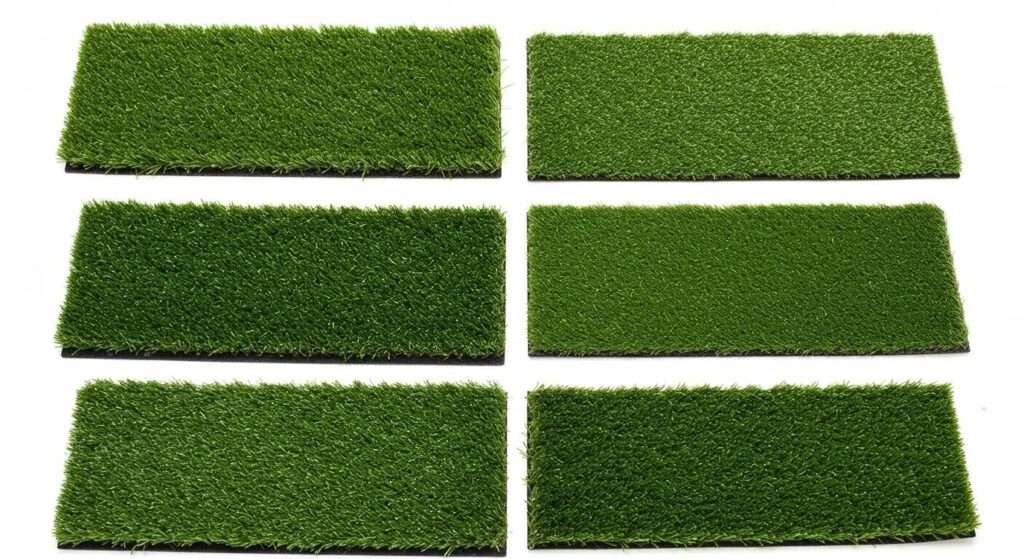
Choosing the right turf means focusing on a few key priorities: a short pile height, a high face weight, dense stitch density, and a backing with excellent permeability. These features are essential for a surface that delivers true ball roll and lasting durability. Together, they create a surface that beautifully mimics the characteristics of bentgrass—think short fibers, close spacing, and consistent firmness—ensuring your ball reacts exactly as you expect. The biggest benefit? A more consistent, Stimp-like speed and a wonderfully realistic feel, all without the hassle of excessive maintenance. When evaluating samples, always prioritize pile height (typically 6–12 mm for putting surfaces), face weight, and actual ball-roll tests over just visual appearance.
Opting for purpose-built putting turf, rather than general landscape grass, will significantly reduce rework and boost your return on investment, because specialized turf is simply designed for superior long-term performance.
What Turf Features Truly Improve Ball Roll and Realism on Putting Greens?
When it comes to a realistic and consistent putting experience, certain turf features make all the difference. A short pile height (ideally 6–12 mm), a high face weight, and dense stitch counts are crucial for promoting uniform ball roll and preventing fibers from collapsing. Additionally, backing permeability is vital for ensuring proper drainage and playability, even after a rain shower. The type of fiber and its cross-section also play a role in firmness—monofilament short-pile fibers tend to stand upright, supporting a smooth roll, while denser thatch layers can subtly alter speed. Some manufacturers even provide ball-roll performance metrics that correlate to Stimp readings; testing samples on your own leveled base is a great way to validate real-world behavior. Choosing turf that naturally matches your desired ball pace can also reduce the need for extra infill, which might otherwise change the speed.
These specific material attributes clearly demonstrate why specialized putting green products consistently outperform generic landscape turf. In the next section, we’ll dive deeper into contrasting these two options.
Why Is Specialized Putting Green Turf a Game-Changer Compared to General Landscape Grass?
Specialized putting green turf is truly engineered for the game: it’s meticulously designed with uniform pile height, superior backing stability, and optimal infill compatibility to deliver consistent pace and exceptional durability. In contrast, general landscape turf prioritizes aesthetics and foot-traffic resilience over the nuanced demands of ball roll. Using generic landscape turf for a putting surface often leads to frustratingly inconsistent speeds, quicker fiber collapse, and more maintenance headaches trying to correct roll issues. Take, for example, a specialized product like our Pro Putting Green – PPG, which perfectly combines short-pile construction with a backing that supports consistent ball roll and precise infill calibration. For homeowners who dream of predictable play, investing in specialized turf means fewer long-term adjustments and significantly reduced maintenance needs.
When you’re evaluating turf and installation services, we highly recommend testing sample strips on your prepared base. This allows you to personally check the actual roll and feel before making a full commitment to installation. Generate Leads and Sales, Promote Products and Services, Drive Website Traffic
What Are the Key Mistakes in Seaming and Cup Installation on Your Synthetic Putting Green?
Errors in seaming and cup installation are highly visible and can be incredibly frustrating: misaligned seams create noticeable lines that can deflect your golf ball, and improperly installed cups can wobble or even tear the turf edges, both of which completely ruin the play. The secret to achieving invisible seams lies in meticulous tension control, precise butt-joining, and using the right seam tape/adhesive or stitching that perfectly matches your turf backing and anticipated usage. For correct cup installation, you’ll need rigid sleeves, proper depth, and reinforced surrounds to ensure the hole remains perfectly flush and stable, even with repeated use. Paying close attention to these details is essential for preserving both the beauty and functionality of your green.
Flawless seaming and cup work demand careful surface preparation and thorough verification checks, ensuring perfect alignment and playability before you finalize the perimeter.
Here’s a comparison of seam and cup methods to help guide your selection and performance expectations.
| Method | Characteristic | Performance Impact |
|---|---|---|
| Seam tape & adhesive | Simpler installation process | Low visibility when prepared correctly; offers moderate durability |
| Stitching (seam sewing) | Strong mechanical join | Provides higher durability; ideal for heavy-use greens |
| Cup sleeve with rigid insert | Ensures cup stability | Maintains consistent depth and effectively prevents tearing |
This table clearly shows that stitching offers superior durability for high-traffic greens, while seam tape can be highly effective when seams are meticulously prepared and tensioned.
How Can Proper Seam Alignment Prevent Visible Lines and Uneven Play?
Achieving perfect seam alignment starts with cleanly trimmed edges, uniform tension, and consistent blade orientation. This ensures that the pile direction and height match flawlessly across all joins, effectively preventing visible lines and any disturbance to your ball roll. Preparing seams involves carefully trimming the backing to a straight edge, applying adhesive or seam tape exactly as recommended by the manufacturer, and making sure turf faces meet without any overlap or gap. A great test is to roll a ball across the joint to detect any subtle deflection; adjust tensioning or trimming until the roll is perfectly true. Final finishing and brushing will then lock the fibers into place, making your seams virtually invisible.
A perfectly aligned seam significantly reduces the risk of cup edge problems, which is precisely why seam and cup work should always be coordinated before the final infill and finishing touches.
What Is the Correct Method for Installing Golf Cups in Artificial Putting Greens?
Correct cup installation involves using a rigid sleeve, perfectly sized for the cup and set to a consistent depth, ensuring the hole remains flush with the turf and allows for a repeatable ball drop. These sleeves must be securely anchored and surrounded with compacted leveling material or a dedicated ring to prevent any movement. Best practice typically dictates setting the cup top flush with the turf surface and reinforcing the perimeter with a stable collar—this crucial step prevents tearing and sagging, even with repeated play. Always verify the cup’s vertical alignment and flushness by rolling balls toward it from various angles to confirm a true fall; correct any minor misalignments before the final infill is placed. Proper cup installation is key to preserving playability and minimizing long-term repair needs.
Given the precision required, cup installation often greatly benefits from experienced installers who can expertly match cup systems to your chosen turf and base, ensuring consistently perfect play.
Why Is Applying the Right Amount of Infill Absolutely Crucial for Putting Green Longevity?
Infill is a silent hero for your short-pile turf: it stabilizes the fibers, supports them for a true roll, and contributes significantly to both drainage and resilience. Too little infill, and you’ll see fiber collapse and an inconsistent, soft roll; too much, and your green becomes overly firm, potentially reducing permeability. The magic happens because infill creates a micro-structure beneath the fibers that directly influences firmness and ball speed. With the correct infill selection and depth, you’ll enjoy consistent Stimp-like behavior, improved wear resistance, and predictable, easy maintenance cycles. Always choose your infill based on the turf manufacturer’s specifications and your intended use—a casual practice green might need different calibration than a high-traffic, multi-player area.
Properly balancing your infill ensures your turf performs exactly as intended, preventing drainage or compaction problems that could otherwise emerge over time.
What Types of Infill Are Best for Artificial Putting Greens?
When it comes to infill, you have a few excellent options, each with its own benefits: silica sand is a stable choice that promotes consistent roll; specialty putting infills can fine-tune speed and reduce compaction; however, heavy crumb rubber is generally not suitable for putting surfaces as it can drastically alter ball speed and firmness. Below, you’ll find a helpful comparison table to guide your infill choice based on performance characteristics and maintenance profiles.
Compare common infill options for putting greens and their impact on your game.
| Infill Type | Characteristic | Playability / Maintenance |
|---|---|---|
| Silica sand | Excellent stability & weight | Delivers consistent roll; requires periodic top-ups |
| Specialty putting infill | Tunable firmness for precision | Fine-tunes speed and offers an optimized feel; higher cost but superior performance |
| Crumb rubber | Provides cushioning | Not recommended for putting greens; significantly alters speed and feel |
This comparison highlights silica sand as a reliable baseline, while specialty infills offer precise play tuning for owners seeking exact speeds and an optimized feel.
How Does Insufficient or Excessive Infill Affect Your Turf’s Performance?
Getting the infill just right is crucial! Insufficient infill leads to fiber collapse, exposed backing, and a soft, inconsistent putting surface that slows your ball and increases wear. On the flip side, excessive infill creates an overly firm, fast surface that can drastically change your intended speeds and even impair drainage. You can diagnose infill issues by checking if fibers stand upright, gently running a small tool to feel for backing support, and observing how your ball behaves across multiple putts. Remediation can range from simple mechanical brushing and adding top-up sand to a complete decompaction and renewal if severe compaction has reduced permeability. Always follow the manufacturer’s recommended grams per square meter or depth measurements to ensure balanced performance and lasting longevity.
Proper infill management is the final, crucial step in your installation sequence, stabilizing the turf and protecting your seams and cups from unwanted movement.
When Should You Consider Professional Installation to Avoid DIY Putting Green Mistakes?
Choosing professional installation often makes perfect sense, especially when your site is complex, you desire a high level of performance, or you’re looking for long-term value that outweighs initial DIY savings. Professionals bring calibrated base systems, precise drainage work, accurate seaming, and consistent cup installations to the table, significantly reducing the risk of costly rework. It’s essentially a transfer of risk: specialists anticipate soil variability, slope adjustments, and material interactions that often stump even the most enthusiastic DIYers. For homeowners in the San Jose area dealing with slopes, challenging native soils, or dreaming of a competition-level green, professional installation minimizes the chance of expensive rebuilds and ensures lasting play quality. Consider calling in a pro for complex drainage needs, steep slopes, or when you absolutely require precise, Stimp-like speeds.
Below are two quick case examples that beautifully illustrate how professional help can prevent frustrating rework.
- Case example — Settlement correction: A homeowner installed turf over compacted clay and soon noticed progressive dips. Our professionals stepped in, excavated, installed a layered crushed-stone sub-base with proper compaction, and restored consistent roll within tolerance. This expert remediation avoided repeated local patching and brought back the joy of playability.
- Case example — Drainage retrofit: A yard with poor runoff developed chronic pooling after every rain. Our professional design team installed a permeable sub-base, meticulously graded to a 1.5% slope, and added strategic outlet drains. Now, the green drains beautifully after storms, preventing microbial issues and backing damage.
How Does Heavenly Greens’ Expertise Prevent Common Installation Problems?
Heavenly Greens excels at preventing common installation problems by expertly applying tested base systems and perfectly matching products to your specific site conditions. We utilize specialized putting products like our Pro Putting Green – PPG and shock-absorbing systems such as Eagle Green w/ Pad when appropriate, minimizing both base-related and playability errors. Our extensive San Jose-area experience helps us anticipate the unique soil and slope challenges typical to the region, allowing us to choose materials and compaction strategies that effectively resist settlement. Two quick examples of our approach include targeted base rebuilding on problematic sites and tailored infill calibrations that have consistently restored uniform ball roll in countless previous installations. For projects where consistent performance and warranty-backed workmanship are paramount, professional installation with Heavenly Greens often translates to reduced long-term costs and maintenance.
Generate Leads and Sales, Promote Products and Services, Drive Website Traffic
Heavenly Greens proudly offers expert consultation and installation services throughout the San Jose area for homeowners who want to confidently avoid DIY pitfalls and achieve a truly durable, playable backyard putting green.
What Are the Risks of DIY Backyard Putting Green Installation?
While DIY putting green installation might seem like a way to save money upfront, it commonly leads to under-specified base depths, inadequate compaction, poor drainage, visible seams, and infill miscalibration—all of which inevitably force costly corrections later. DIYers frequently underestimate the sheer number of compactor passes needed, the importance of lift-based compaction, and the subtle, precise grading required for those ideal 1–2% slopes. Typical remediation costs can vary widely but often far exceed the initial DIY savings when rework involves excavation, new aggregates, and professional labor. Early recognition of key risk factors—like steep slopes, clay soils, or proximity to structures—should be a clear signal to seek a professional consultation rather than pushing through with a DIY approach.
Understanding these DIY risks empowers homeowners to make an informed decision about whether professional systems, expert product selection, and local installation experience truly justify the investment.
How Does Heavenly Greens’ Expertise Prevent Common Installation Problems?
Heavenly Greens effectively mitigates installation risks by combining appropriate product selection, proven base assemblies, and precisely calibrated compaction methods, all tailored to the unique conditions of the San Jose area. For instance, we expertly match our Pro Putting Green – PPG with a compacted crushed stone base to ensure that the predictable, consistent roll you desire. Our comprehensive workflow includes thorough pre-install surveys, controlled excavation depths, meticulous lift-based compaction, and rigorous verification tests, ensuring that seams and cups are installed on an absolutely stable platform. These meticulous practices significantly reduce the chance of post-installation settlement, drainage failures, or seam separation—issues that typically trigger costly corrective work. For homeowners seeking a professional option to secure consistent, long-term performance, our approach minimizes both lifecycle cost and ongoing maintenance effort.
Generate Leads and Sales, Promote Products and Services, Drive Website Traffic
Frequently Asked Questions About Your Backyard Putting Green
What is the ideal slope for a backyard putting green?
The ideal slope for your backyard putting green typically ranges from a gentle 1% to 2% incline, moving away from any nearby structures. This slight slope is absolutely crucial for effective drainage, preventing unsightly water pooling, and ensuring a consistently smooth playing surface. A well-planned slope allows water to flow off the green naturally, significantly reducing the risk of microbial growth and turf degradation. Homeowners should carefully assess their landscape’s natural contours and adjust the slope accordingly during installation to maintain optimal playability and ensure the longevity of their putting green.
How can I maintain my backyard putting green after installation?
Keeping your backyard putting green in top shape involves a few simple, regular tasks: brushing, checking infill levels, and routine cleaning. Brushing the turf helps keep the fibers standing upright, which is essential for a smooth, true ball roll. Periodically, you’ll want to check your infill levels to ensure they meet the manufacturer’s recommended specifications, as too little or too much can impact performance. Additionally, make sure to clean the surface regularly to remove any debris and organic matter that could encourage microbial growth. Regular maintenance not only enhances your playing experience but also significantly extends the lifespan of your beautiful putting green.
What are the benefits of using professional installation services?
Choosing professional installation services offers a wealth of advantages, including unparalleled expertise in site assessment, material selection, and advanced installation techniques. Professionals can accurately evaluate your specific soil conditions, drainage requirements, and slope needs, guaranteeing a stable and incredibly durable base. Their extensive experience helps prevent common installation mistakes, such as improper compaction and drainage issues, which could otherwise lead to costly repairs down the road. Plus, professional installers often provide valuable warranties, giving homeowners complete peace of mind regarding the long-term performance and longevity of their putting green.
Can I install a putting green on a slope?
Yes, absolutely, you can install a putting green on a slope, but it definitely requires meticulous planning and expert execution. The slope should be manageable, ideally no steeper than 2%, to ensure both proper drainage and optimal playability. When installing on a slope, it’s absolutely essential to create a robust and stable base that can fully support the turf and prevent any erosion. Additionally, consider incorporating retaining walls or terracing techniques to maintain the integrity of your green and ensure a consistent playing surface across the entire area.
What should I look for when selecting turf for my putting green?
When selecting the perfect turf for your putting green, prioritize key features such as a short pile height (typically 6-12 mm), a high face weight, and a tight stitch density. These characteristics are vital for contributing to a realistic ball roll and ensuring long-lasting durability. Additionally, make sure the turf backing is permeable to facilitate excellent drainage. We highly recommend evaluating samples and conducting actual ball-roll tests on your prepared base to truly assess performance. Choosing specialized putting turf over general landscape grass will consistently yield superior long-term results and significantly reduce your maintenance needs.
How often should I replace the infill in my putting green?
The frequency of infill replacement in your putting green largely depends on its usage and the specific type of infill you’ve chosen. Generally, we recommend checking your infill levels every 6 to 12 months. If you start to notice fiber collapse or uneven surfaces, it might be time to add or replace infill. Regular maintenance, including consistent brushing and periodic top-ups, can help maintain optimal performance. Following the manufacturer’s guidelines for infill depth and type will ensure your putting green remains beautifully playable and visually appealing for years to come.
What are the signs that my putting green needs repair?
Signs that your putting green might be signaling a need for repair include visible seams, uneven surfaces, persistent pooling water, and an inconsistent ball roll. If you notice areas where the turf is sagging or fibers are collapsing, it could indicate insufficient infill or underlying compaction issues. Additionally, if your green retains water after rainfall or shows any signs of microbial growth, it likely requires drainage adjustments. Regular inspections and prompt repairs are key to maintaining the exceptional quality and extending the longevity of your cherished putting green.
Achieve Your Dream Putting Green with Confidence
Installing a backyard putting green with precision is the ultimate way to ensure a smooth, consistent playing surface that truly elevates your golfing experience. By confidently avoiding common mistakes related to base preparation, drainage, and turf selection, you can enjoy long-lasting performance and endless play. For those seeking expert assistance and peace of mind, Heavenly Greens offers tailored solutions to help you create the perfect putting green. Contact us today at (669) 587-2901 and let us transform your backyard into a golfer’s paradise!


