
By Troy Scott, Heavenly Greens
A safe, enjoyable backyard playground starts with knowing the space required for playground turf. This guide outlines optimal area requirements for installation so children can play freely and safely. Proper planning delivers durability and reliable performance, improving outdoor play experiences. Many homeowners misjudge dimensions, creating safety risks. Here we explain ideal measurements, how to measure your yard, available turf materials, and planning and installation considerations. We also describe how Heavenly Greens can help convert your backyard into a secure play area.
What Is the Ideal Size for a Backyard Playground Turf Area?
Selecting the correct size is essential for both safety and function. The area must fit play activities while providing required clearances and safety zones. Each structure has specific space needs that vary with the intended number of users. These measurements should meet local safety standards to reduce the risk of injury. In addition to minimum clearances, consider how children move between pieces of equipment, where caregivers will sit or stand, and whether you want room for bikes, balls, or portable play items. A well-sized area supports supervision and allows equipment to be used as intended without crowding.
How Many Square Feet Should You Allocate for Safe Play?
Allocating sufficient square footage reduces the risk of accidents. For a small toddler area, plan for about 200 to 300 square feet. For larger structures that serve multiple children, 500 to 1,000 square feet is often appropriate. Ensure at least 6 feet of clearance around play equipment to allow safe movement and lower fall risk. When choosing a size, also factor in pathways, seating areas for adults, and any soft-surface safety zones required beneath swings or climbing structures. If space is limited, prioritize clearances and consider compact equipment with smaller footprints, while keeping surfacing requirements in mind.
What Are Typical Backyard Playground Size Ranges?
Residential playgrounds commonly range from 300 to 1,000 square feet. Size depends on yard availability, chosen equipment, and local safety regulations. Evaluate layout options carefully to balance safety, function, and overall usability of the play area. For multi-use yards, plan flexible zones where turf can coexist with garden beds, pathways, or seating. Sketch several layout options at full scale on paper or using simple digital tools to visualize how equipment, movement, and supervision will work together.
How Do You Measure Your Backyard for Playground Turf Installation?
Accurate measurements are essential for effective turf installation. They help you maximize usable space, avoid costly errors, and order the correct amount of turf. Reviewing the synthetic turf products available is an important first step. Detailed measurements also allow you to budget for edging, base materials, and drainage components so there are no surprises during installation.
What Step-by-Step Methods Ensure Accurate Turf Area Measurement?
Follow these steps to measure your backyard accurately for turf installation:
- Gather Tools: Use a measuring tape, stakes, and string to define the area. Consider using a laser distance measurer for longer distances or irregular shapes to improve accuracy.
- Outline the Area: Place stakes at each corner and tie string around them to create a visual boundary: Mark gates, steps, and any slope changes so installers can plan transitions and edging.
- Measure Dimensions: Record the length and width, then calculate the total square footage by multiplying them. For irregular shapes, break the area into rectangles and triangles, measure each separately, and sum the areas for a precise total.
- Account for Obstacles: Note any trees, garden features, or paths that may obstruct usable play space. Measure around roots and consider protective root zones if trees will remain; these affect base preparation and drainage planning.
- Final Assessment: Double-check all measurements and ensure they align with your intended design. Take photos and notes to share with your installer — these simplify quoting and prevent miscommunication.
How to Plan Layouts to Maximize Usable Play Space?
Plan the layout to optimize usable space and sightlines. Place major play structures in relation to existing landscape features. Use trees or shade structures to improve comfort and schedule play away from direct sun when possible. Arrange equipment to allow clear supervision and safe movement between elements. If possible, allocate a zone for free play and another for equipment—this separation helps avoid collisions and makes supervising multiple children easier.
Which Playground Turf Materials Are Best for Safety and Durability?
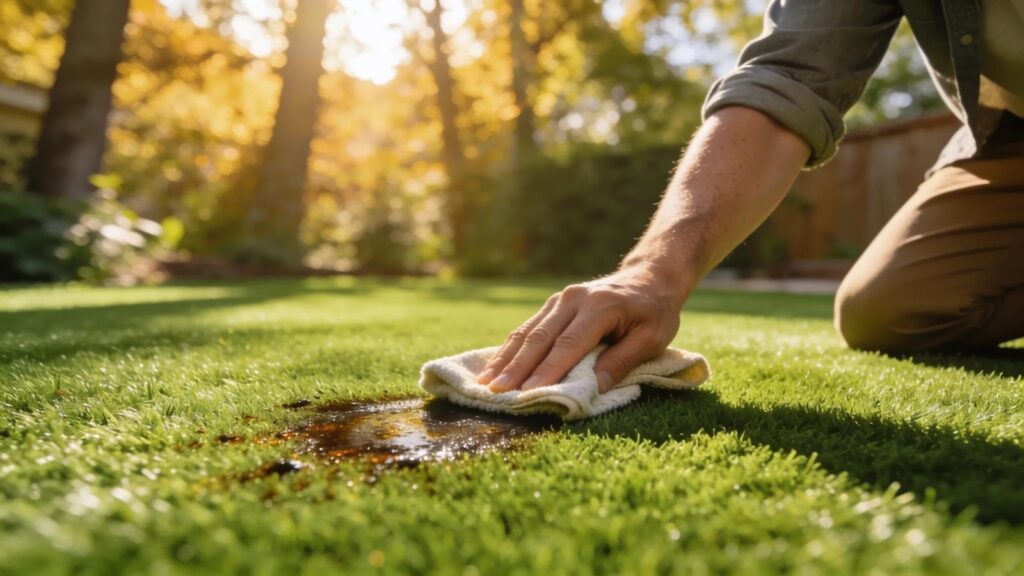
Choosing the right turf materials directly affects safety and lifespan. High-quality synthetic turf offers greater durability than natural grass and lowers ongoing maintenance demands. When selecting materials, review fiber type, backing strength, drainage characteristics, and warranty terms. Durable fibers resist matting and wear from repetitive play, while a robust backing and appropriate infill support drainage and resilience underfoot.
What Types of Artificial Grass Comply with Playground Safety Standards?
Select products specifically engineered for playground use, and look for certifications confirming compliance with recognized safety standards, such as those issued by the Consumer Product Safety Commission (CPSC). Playground-grade turf is often paired with impact-absorbing underlays and tested to meet fall attenuation requirements; these combinations reduce the likelihood of injury from typical playground falls. Ask manufacturers or your installer for product test reports and installation details that demonstrate compliance.
How Does Turf Thickness Affect Child Safety and Comfort?
Turf thickness influences cushioning and comfort. A taller pile and adequate underlay reduce impact forces from falls. Recommended pile heights typically range from 2 to 3 inches, depending on the equipment and safety requirements. However, pile height alone is not enough: the full system — turf, infill, and compacted base or underlayment — determines how well the surface performs under impact. Discuss the intended equipment and expected fall heights with your installer to select the right combination for both protection and day-to-day comfort.
What Are the Cost Components of Backyard Playground Turf Installation?
Budget planning requires understanding the main cost drivers: material quality, installation complexity, and site preparation. Each factor affects the final project price. Material quality includes turf fiber type, backing systems, and infill. Installation complexity can include grading, equipment access, edging options, and slope correction. Site preparation often includes excavation, geotextile fabric, a compacted aggregate base, and drainage solutions—each of which adds to labor and material costs.
How Much Does Playground Turf Installation Typically Cost in San Jose?
The total investment for synthetic grass projects in San Jose varies depending on material choices, required ground preparation, and the unique scale of your backyard goals. Use these figures to estimate your investment. Keep in mind that final quotes should account for site preparation, removal of existing materials, drainage needs, and edging or border materials. Obtaining multiple quotes and reviewing what each proposal includes helps ensure apples-to-apples comparisons.
Are There Budget-Friendly Options Without Compromising Quality?
Yes. You can find economical turf options that still meet safety standards. Focus on durable materials and installation methods that reduce long-term maintenance costs. Selecting a mid-range turf with a reliable backing and a proper base often yields the best balance between upfront cost and lifespan. Ask about installer warranties and any included maintenance guidance to protect your investment.
Choosing Certified Artificial Turf for Playground Safety
Regular maintenance preserves appearance and performance. Routine tasks include removing debris, inspecting for wear, and adjusting infill levels as needed. Seasonal checks help identify early signs of damage or drainage issues. Establish a simple maintenance schedule that aligns with your climate: frequent leaf clearing during wet seasons and more thorough inspections after prolonged dry spells or heavy storms will keep the surface safe and attractive.
What Are Effective Maintenance Practices for Backyard Turf?
Maintain backyard turf to preserve safety and function. Key practices include:
- Regular Cleaning: Remove leaves, sticks, and other debris. Use a leaf blower or soft rake rather than metal tools to avoid damaging fibers or backing.
- Periodic Brushing: To stand the blades upright and rejuvenate the appearance of the turf. Brushing also redistributes infill and helps maintain consistent cushioning.
- Infill Level Checks: Ensure the infill material remains level to provide necessary cushioning and fall protection. Add or redistribute infill when it is low or compacted, and follow the manufacturer’s recommendations for infill type and depth.
How Often Should Playground Turf Be Inspected for Safety?
Inspect turf at least once a year and after major weather events, such as heavy rain or storms, to identify hazards early. In high-use areas or after significant activity, check more frequently for wear patterns, seams lifting, or exposed infill. Early detection enables minor repairs that prevent larger, costlier problems and maintain expected safety performance.
What Are the Latest Safety Standards and Regulations for Playground Turf Areas?
Keep informed about current safety standards and regulations, which define installation and performance requirements. Following these updates helps maintain compliant and safe play areas. Standards often address fall height protection, surface firmness, drainage, and material selection. Consulting local building departments or a professional installer ensures that your design complies with both safety guidelines and any municipal requirements.
How Do Consumer Product Safety Commission Updates Affect Turf Requirements?
Updates from the Consumer Product Safety Commission can change turf requirements by clarifying safety criteria or adding compliance steps. Review these updates to ensure installations remain aligned with best practices. Because guidance may evolve, especially around impact attenuation or chemical safety, maintain documentation of your product specifications and test reports as part of your long-term maintenance records.
What Safety Zones and Clearances Are Required Around Play Areas?
Maintain appropriate safety zones around equipment to reduce the risk of accidents. A 6-foot buffer around play structures is a common recommendation to allow safe movement and reduce collision hazards. Consider additional clear space near swings, slides, and climbing structures where predictable fall patterns occur. Plan buffer zones that accommodate caregiver supervision and potential run-out areas during active play, ensuring children have sufficient space to stop safely.
How Do Heavenly Greens’ Services Support Playground Turf Planning and Installation?
Heavenly Greens provides planning and installation services to support homeowners. Their team delivers tailored consultations and guidance through design and installation phases. Professional installers can advise on product selection, base construction, drainage solutions, and finishing details such as edging and transition strips for adjacent surfaces. Their experience helps translate an initial concept into a practical, safe installation that performs well over time.
What Playground Turf Products and Installation Services Does Heavenly Greens Offer?
Heavenly Greens supplies a range of synthetic turf products designed for playground applications and offers installation services focused on safety and quality. To learn more about their offerings, visit Heavenly Greens. They can provide sample swatches, installation portfolios, and references to help you evaluate material appearance and performance before committing to a design.
How Can Customers Get Customized Space Planning and Installation Assistance?
Customers can request personalized consultations with Heavenly Greens. The team will tailor recommendations to specific backyard dimensions and advise on layout and safety features. Consultations typically include a site evaluation, a discussion of intended uses, and an overview of maintenance needs so that you can make informed decisions about materials and budget. Many homeowners find an on-site visit helpful for identifying hidden issues, such as drainage low spots or root zones, that may affect installation.
What Common Questions Do Homeowners Ask About Playground Turf Sizing?
Homeowners commonly ask how turf area size affects play, the dimensions required for specific structures, appropriate equipment spacing, and how layout choices influence usability. Clear answers improve planning and overall satisfaction. Other frequent questions concern drainage, how turf performs in various weather conditions, and whether the turf can be installed over existing surfaces. A thoughtful sizing plan accounts for both active-play needs and quiet areas for seating or storage.
Can Visual Guides and Videos Help With Playground Turf Installation Planning?
Yes. Visual guides and instructional videos illustrate effective layouts and installation techniques, helping DIY installers and first-time planners achieve reliable results. Step-by-step visuals clarify tricky steps like seam placement, infill distribution, and precise trimming around obstacles. Use manufacturer videos alongside installer guidance to confirm proper practices and learn about routine maintenance tasks that preserve safety and appearance.
Frequently Asked Questions
What Safety Features Should Be Included in Backyard Playground Design?
Include soft landing surfaces, such as synthetic turf, to cushion falls; rounded edges on equipment; safety mats where appropriate; and clear spacing between items. Ensure all equipment complies with relevant safety standards, such as those set by the CPSC, and perform regular inspections and maintenance to keep features effective. Additionally, provide clear sight lines for supervising adults, locate equipment away from hard landscaping or irrigation heads, and use borders or edging to define the play zone and prevent tripping hazards.
How Can Weather Conditions Affect Playground Turf?
Weather affects turf performance and longevity. Heavy rain can cause pooling and drainage issues; strong sunlight can fade fibers over time; and snow or ice can freeze surfaces and increase the risk of slips. Proper drainage, timely snow removal, and selecting turf made to withstand local conditions reduce these impacts. Consider integrating subtle grading and perimeter drains during installation to move water away quickly, and select UV-resistant turf products if your site is in a high-sun area to maintain color and fiber resilience.
What Steps Should You Take if Playground Turf Becomes Damaged?
Address damage promptly. Assess the extent—small tears may be repairable with adhesive or patches, while larger damage may require professional replacement. Regular inspections catch wear early, and maintaining proper infill helps prevent accelerated degradation. For extensive repairs, consult a turf professional. Documenting damage with photos and noting when issues are first observed will help determine whether repairs are covered by warranty and guide efficient remediation decisions.
Can Playground Turf Be Installed Over Existing Grass?
Yes, but adequate preparation is essential. Clear and level the existing grass, remove weeds, and install a proper base with suitable drainage. Proper site preparation prevents future problems and supports long-term turf performance; consider professional installation for best results. Installing over existing grass without full preparation risks settling, uneven surfaces, and compromised drainage that shorten turf life and increase maintenance needs.
What Are the Environmental Considerations When Choosing Playground Turf?
Consider the materials used, their sourcing, and ecosystem impact. Choose turf made from recycled or eco-friendly materials that meet safety standards and avoid harmful chemicals. Good drainage protects surrounding plantings, and selecting manufacturers with sustainable practices supports environmental responsibility. Additionally, consider how runoff is managed to avoid concentrating heat or debris in nearby planting beds, and choose infill materials that minimize dust and runoff concerns.
How Does the Installation Process Impact the Overall Cost of Playground Turf?
Installation affects total cost through site preparation, labor, and materials. Complex grading or drainage work raises the price, and professional installation adds to the cost compared with DIY. However, correct installation reduces the risk of costly repairs later. Obtain detailed quotes to compare costs and scope. Ask bidders to itemize base preparation, edging, removal of old materials, and any warranty or follow-up maintenance included, so that you can evaluate long-term value relative to the initial cost.
Conclusion
Converting your backyard into a safe playground with synthetic turf enhances enjoyment and reduces the risk of injury. Proper sizing, clearances, and material selection allow parents to create a secure space tailored to their children. Partnering with a specialist like Heavenly Greens ensures professional installation that meets safety standards. Explore available playground turf options for a safe, engaging play environment.


