
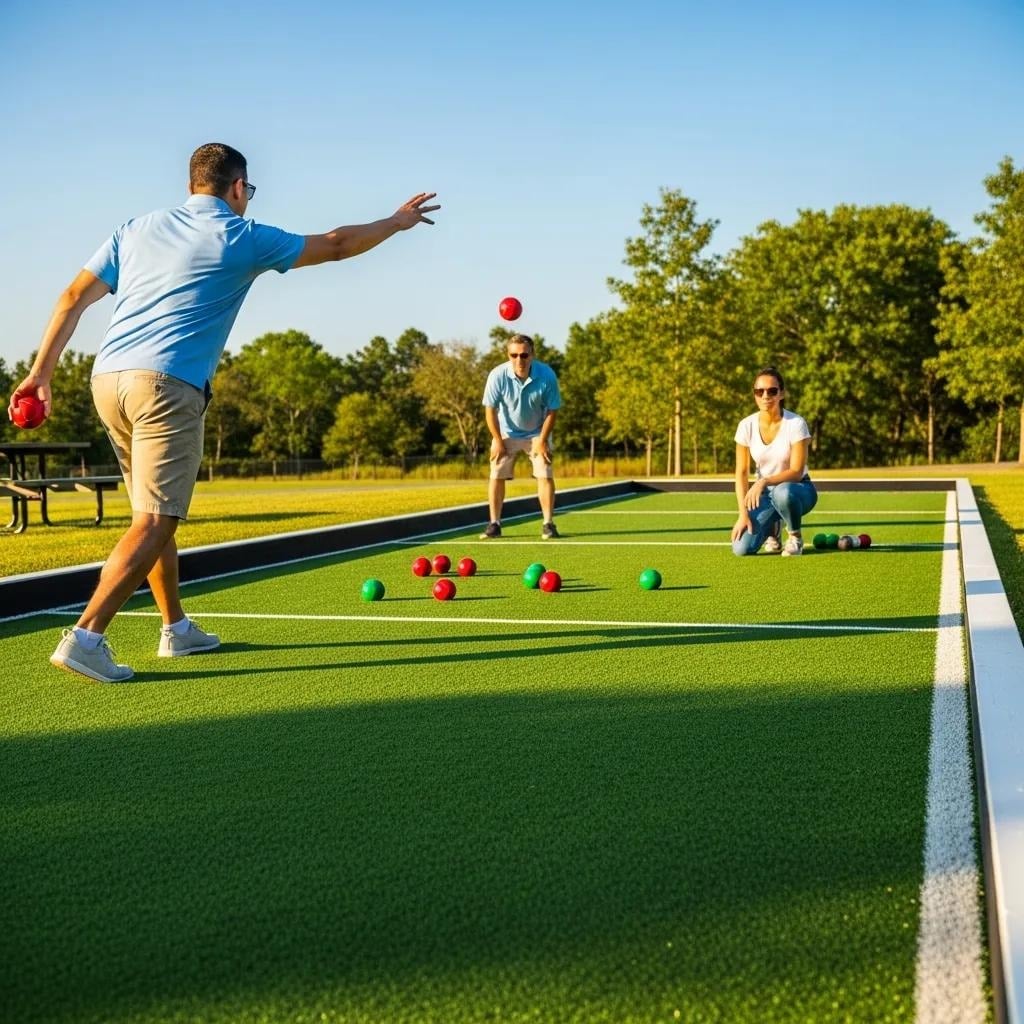
Bocce ball, a time-honored game, is increasingly played on artificial turf instead of natural grass. Players and clubs are making the switch because synthetic surfaces deliver steadier ball roll, cut upkeep, and create consistent conditions. This guide explains why that matters, how installation works, and which turf types perform best for bocce courts so that you can choose with confidence.
Natural grass can be unpredictable — uneven patches, mud after rain, and seasonal changes all affect play. Artificial turf provides a reliable, even surface that improves performance and reduces ongoing maintenance. Below, we break down the main benefits, the installation steps, and the turf features to look for when planning a bocce court.
Moving from traditional grass to modern synthetic surfaces can improve the overall bocce experience.
Bocce Court Surfaces: Traditional vs. Improvised
Some wine-and-bocce venues used traditional court surfaces, while others made do with improvised setups — a contrast that highlights how surface choice shapes play.
The Joy of Bocce, 2010
What Are the Key Benefits of Artificial Turf for Bocce Ball Courts?
Artificial turf brings several clear advantages for bocce courts: long-lasting durability, minimal maintenance, and a consistent playing surface. Those three factors combine to make gameplay fairer and to reduce the time and cost of upkeep.
How Does Artificial Turf Enhance Bocce Ball Playability and Performance?
Artificial turf creates a uniform surface that makes ball movement predictable, so shots behave the same way from game to game. Unlike grass — which can rut, get soft when wet, or develop bare spots — synthetic turf keeps a steady roll in most weather. Many turf systems are engineered to optimize ball roll and rebound, helping players rely on skill and strategy rather than the luck of the surface.
Multiple reviews find that synthetic courts often deliver more reliable playability than lawn courts.
Synthetic Turf vs. Natural Grass: Playability Benefits
Reviews comparing synthetic turf and natural grass report that, for many recreational and sports uses, artificial surfaces provide improved playability and consistency.
Natural Grass vs Synthetic Surfaces for Recreation and Sports: An Evidence Review, 2019
What Maintenance Advantages Does Synthetic Grass Offer Compared to Natural Grass?
One of the biggest draws is low maintenance. Artificial turf eliminates the need for mowing, watering, and fertilizing. That means less time spent caring for the court and more time playing. Synthetic turf also eliminates most pesticide and herbicide use, which is a practical environmental plus for many facilities.
How Is Artificial Turf Installed for Bocce Ball Courts?
What Are the Steps Involved in Bocce Ball Court Turf Installation?
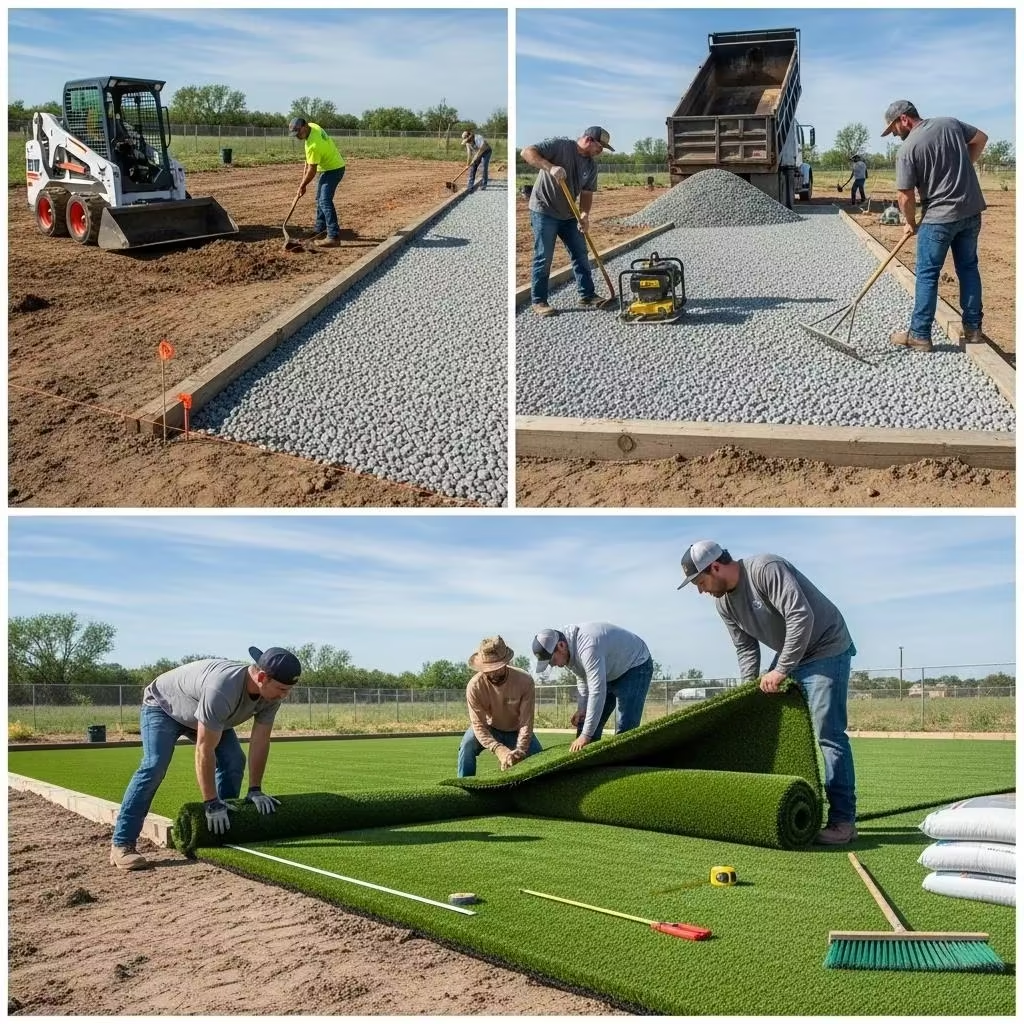
Installation starts with careful site prep: clearing the area, correcting grade issues, and planning drainage. A stable base — typically crushed stone or decomposed granite — is installed next to provide drainage and support. The turf is rolled out, trimmed, and secured, then infill is added to tune the surface’s firmness and ball roll. Done correctly, this sequence produces a durable, playable court ready for regular use.
Which Materials and Techniques Ensure the Best Synthetic Grass Bocce Court?
Quality materials matter. For bocce, choose turf with a shorter pile height (commonly 0.5 to 1 inch) and a dense, smooth infill such as silica sand or a sand–rubber blend to promote consistent roll. Durable fibers and UV-resistant backing help the surface hold up and keep its appearance over time. Proper base work and compaction are equally important for long-term performance.
Selecting the right infill and installation approach directly affects ball rebound and roll on synthetic courts.
Synthetic Turf Performance: Ball Rebound & Roll
Studies of sand-filled synthetic turf show that infill depth, cleanliness, and surface parameters influence ball rebound, roll, traction, and hardness — all of which are important for play.
The Effect of Maintenance on the Performance of Sand-Filled Synthetic Turf Surfaces, 2010
What Are the Advantages of Synthetic Grass Bocce Courts Over Natural Grass?
How Does Artificial Turf Improve Durability and Weather Resistance?
Artificial turf is design to withstand frequent use and a range of weather conditions. Where grass can be damage by heavy rain, drought, or high foot traffic, synthetic surfaces are more resilient and quicker to return to play-ready condition. That durability means fewer closures and more reliable scheduling for matches and events.
In What Ways Does Synthetic Turf Provide Consistent Playing Conditions?
Because artificial turf is manufacture to uniform standards and installed over a stable base, players experience the same surface from game to game. That predictability helps competitors plan shots and strategies, and it’s especially valuable for tournaments and organized leagues that need fair, repeatable conditions.
Why Is Low Maintenance a Major Factor for Choosing Artificial Turf Bocce Courts?
How Does Artificial Turf Reduce Upkeep Time and Costs?
Synthetic turf cuts routine maintenance tasks — no mowing, less watering, and no seasonal overseeding. That reduces labor and supply costs over the court’s life. While initial installation can be higher than planting grass, many facilities find the long-term savings on maintenance make artificial turf the more economical choice.
What Environmental Benefits Result from Low-Maintenance Bocce Court Turf?
Lower water use and reduced chemical treatments are clear environmental benefits of synthetic turf. That said, artificial surfaces are made from manufacture materials, and production and end-of-life disposal have environmental impacts. For many sites, the overall reduction in water and chemical use makes turf a more sustainable option, especially in water-limited regions.
Which Types of Artificial Turf Are Best Suited for Bocce Ball Courts?
What Features Define the Best Artificial Turf for Bocce?
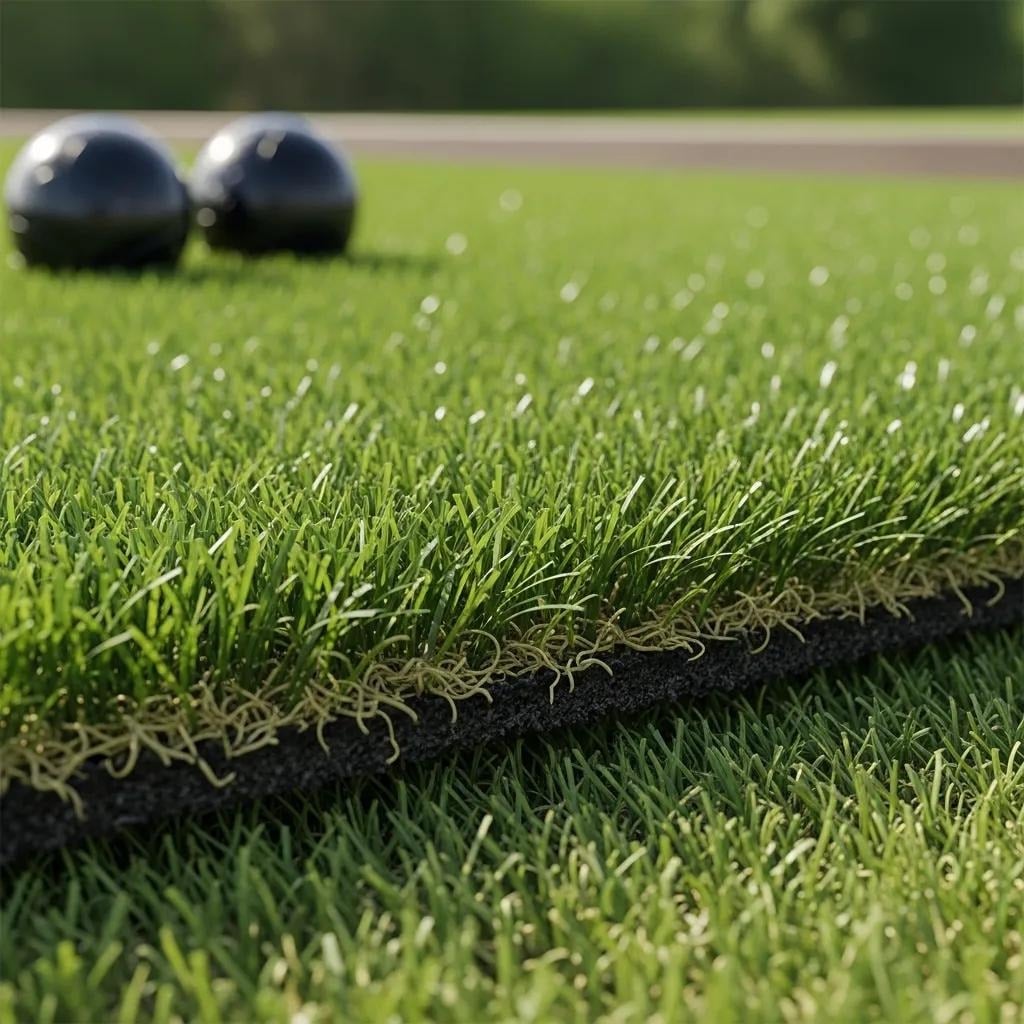
The ideal bocce turf should look and feel firm and even. Aim for a short, dense pile, strong backing, and UV-stable fibers. Those elements help the surface mimic the roll of a well-kept natural court while delivering the consistency players expect.
How Do Different Synthetic Grass Options Compare for Bocce Court Use?
When comparing synthetic grass options, consider balance cost, durability, and surface performance. Lower-cost turfs may save money up front, but can lack the texture and longevity bocce requires. Higher-performance products cost more but provide a truer roll and longer service life — a trade-off worth considering for frequent play or competition.
| Feature | Description | Importance |
|---|---|---|
| Durability | How well the surface stands up to regular use | High |
| UV Resistance | Protection against sun damage and fading | Medium |
| Realistic Appearance | Mimics the look and feel of natural grass | High |
Because of its predictability, low upkeep, and resilience, artificial turf has become a go-to choice for many bocce players and facilities. Proper installation and the right product selection make a big difference — knowing what to prioritize helps you get the playing surface you want.
Frequently Asked Questions
What is the lifespan of artificial turf used for bocce ball courts?
Most quality artificial turf lasts about 10 to 15 years, depending on material quality and how often it’s used. UV-resistant fibers and a durable backing extend life, and routine care — like brushing and debris removal — helps keep the surface performing well for many seasons.
Can artificial turf be installed over existing natural grass?
Yes — but proper preparation is essential. Typically, the grass is remove or compact, and a stable base is built to ensure evenness and drainage. Addressing soil compaction and drainage issues before installing turf prevents future problems and improves longevity.
Are there any health concerns associated with artificial turf?
Modern synthetic turf is generally safe for play, but older products or uncertified materials have raised concerns in the past. Choose turf from reputable manufacturers that disclose materials and certifications, and follow recommended installation and maintenance practices to keep the surface safe and clean.
How does the cost of artificial turf compare to natural grass over time?
Upfront installation for artificial turf is usually higher than planting grass, but lower maintenance costs — no regular mowing, less watering, and fewer supplies — often make turf more economical over its lifetime. Facilities with frequent use or event schedules frequently find that the investment pays off.
What are the best practices for maintaining artificial turf bocce courts?
Keep the turf free of debris, brush fibers periodically to maintain an even surface, and rinse or spot-clean spills as needed. Inspect seams and edges for wear and repair them promptly. These simple routines help preserve playability and extend the turf’s usable life.
Can artificial turf be recycled at the end of its life?
Yes — recycling options for turf are becoming more common. Many manufacturers and recycling centers accept turf materials for repurposing. Check local programs or ask your supplier about end-of-life recycling to minimize environmental impact.
Conclusion
Artificial turf offers reliable play, lower upkeep, and strong durability — all reasons bocce players and venues are making the switch from natural grass. With the right installation and product choices, a synthetic court can deliver consistent, tournament-ready performance for years. Explore our premium turf options to find the surface that fits your court and your game.


