
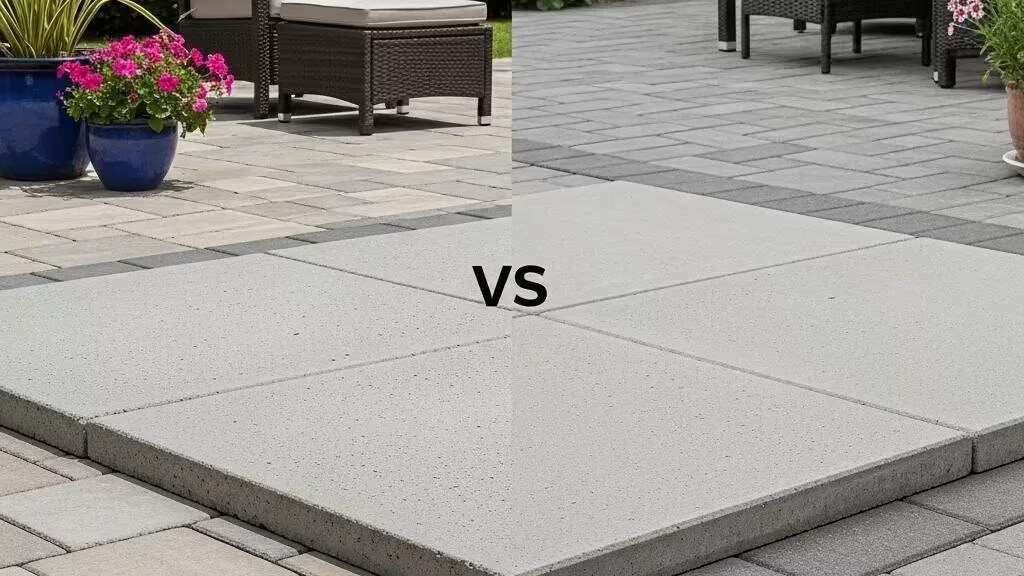
Concrete slabs and pavers are two popular hardscape choices for patios, driveways, walkways, and pool surrounds. Which you pick affects upfront cost, upkeep, longevity, and how your space looks and performs. This guide walks through what each system is, how they’re built, the trade‑offs in initial and lifecycle costs, and practical maintenance and design advice so you can choose with confidence for a home or commercial project. We cover material and installation differences, how each handles cracking and settling, typical repair scenarios, and design approaches—including 2025 trends—that pair well with modern landscapes. Finally, you’ll see best uses for each application and examples of blending pavers with artificial turf for low‑maintenance, pet‑friendly yards, with notes on how Heavenly Greens’ turf and paver services fit into those solutions.
What Are Concrete Slabs and Pavers? Definitions and Key Characteristics
Concrete slabs are poured, continuous surfaces placed over a prepared base; they create a uniform plane that works well under compressive loads. Pavers are individual units—made from concrete, brick, natural stone, or porcelain—set over a compacted base with jointing material and edge restraints. Slabs control cracking through joints and reinforcement; pavers rely on edge restraints, bedding sand, and interlocking patterns to spread loads and allow small, targeted movement. Often the choice comes down to whether you want a seamless, lower‑cost surface (slab) or the flexibility, permeability options, and easier repairs that pavers provide. With those basics in mind, the next sections look closer at materials and installation methods.
What materials and sizes define slabs and pavers?
Slab design is driven by thickness and reinforcement for the intended use: residential patios commonly fall in the 4–6 inch range depending on soil and loads, and driveways typically use 4–6 inches with reinforcement or fiber mesh where extra tensile capacity is needed. Pavers include interlocking concrete, brick, natural stone, and porcelain varieties, with unit thicknesses usually from about 1 to 2 1/4 inches for pedestrian areas and 2 3/8 to 3 1/8 inches (or more) for driveways depending on base design. Slabs can be finished smooth, broomed, stamped, exposed‑aggregate, or colored; pavers offer a wider variety of shapes, textures, and colors because each piece is made and finished individually. Thickness and material choice tie directly to load capacity and long‑term performance, which guides the installation details below.
How do slabs and pavers differ in installation methods?
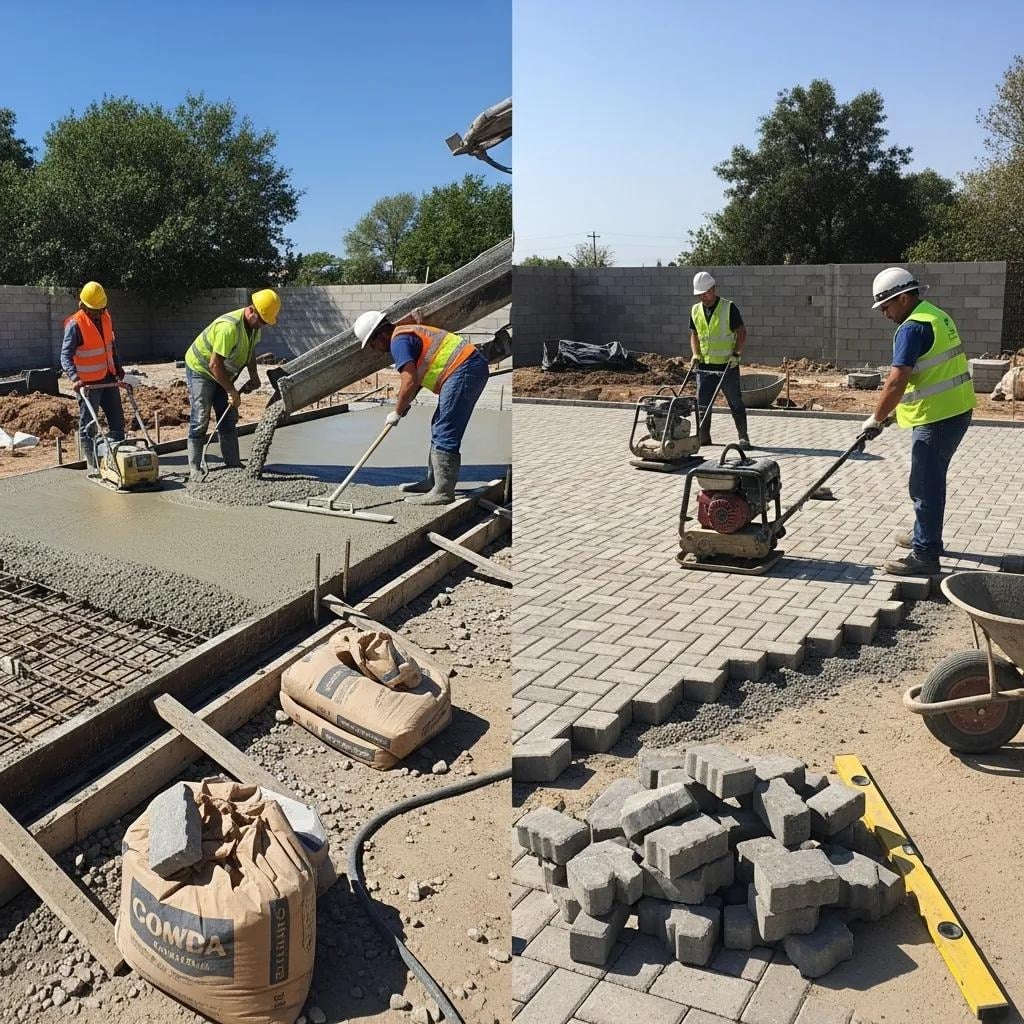
Poured slab work focuses on forming, reinforcing, pouring, finishing, and curing a continuous concrete surface over a compacted subgrade and aggregate base; correct curing and well‑placed joints are essential to limit shrinkage cracking. Paver installations use a layered system: compacted subgrade, drainage/base aggregate, bedding sand, setting the pavers, installing edge restraints, and filling joints with sand or polymeric compounds. That modular method allows staged work and easier localized fixes. Tools differ too: slabs often need concrete trucks, finishing tools, and sometimes pumps, while pavers rely on plate compactors, saws for cutting units, and careful handwork. Knowing these differences helps explain common failure modes and repair approaches, which affect lifecycle cost and maintenance decisions.
How Do Pavers and Concrete Slabs Compare in Cost?
For simple flat areas, poured concrete slabs usually cost less per square foot up front because the work is continuous and uses fewer labor hours per unit area. Pavers often cost more initially because of higher unit prices and more labor‑intensive placement. Over time, though, pavers can be more economical in repair‑prone situations since individual units can be lifted and replaced without full‑surface repairs. When deciding, factor in materials, labor, base prep, sealing, and likely repair frequency. The table below summarizes typical per‑square‑foot cost attributes. If you want help budgeting both turf and hardscape together, Heavenly Greens offers paver installation options and can provide combined estimates for integrated projects.
| Surface Type | Cost Attribute | Typical Range / Value |
|---|---|---|
| Concrete Slab | Upfront material & labor | Lower; common baseline for simple patios |
| Concrete Slab | Maintenance cost over time | Moderate; sealing and occasional patching |
| Concrete Slab | Lifecycle cost per sq ft | Can rise if major cracking or overlays are needed |
| Pavers | Upfront material & labor | Higher; unit costs and precise labor add up |
| Pavers | Maintenance cost over time | Lower to moderate; joint re-sanding and occasional reset |
| Pavers | Lifecycle cost per sq ft | Often lower in areas where localized repairs are common |
What are the upfront and long-term costs of slabs versus pavers?
Initially, a basic poured concrete slab tends to be less expensive per square foot because it’s a single pour and requires fewer hours to place. Decorative slab options—stamping, staining, or integral color—raise the price. Pavers carry higher material and labor costs because each unit is set and jointed, and premium materials like natural stone or porcelain increase the budget further. Long term, slabs that crack often need large patches or overlays (which can be disruptive and relatively costly), while pavers let you repair or re‑level one unit at a time at a lower marginal cost. Looking at likely repair scenarios helps make the full lifecycle economics clearer and points to the better long‑term value for your site.
Life Cycle Cost Analysis: Asphalt vs. Concrete Pavements
ABSTRACT: This report presents a life cycle cost analysis (LCCA) methodology for pavement type selection, using literature review, historical data and interviews. The method is tested on a hypothetical road project in Reykjavík and compares asphalt and concrete pavements across six traffic groups: 2,500; 5,000; 7,500; 10,000; 12,500; and 15,000 vehicles/day/lane. A 40‑year analysis horizon is used, and construction, rehabilitation and user costs are included. A 6% discount rate is applied in the base case, and an allowed rut depth of 3.5 cm is assumed.
Life cycle cost analysis of asphalt and concrete pavements, 2011
Which option offers better value for residential and commercial outdoor spaces?
For many residential patios and low‑traffic walkways, poured concrete slabs deliver the best immediate value: they give a cohesive surface at a lower initial cost and are simple to keep up when conditions are stable. For driveways, commercial plazas, or sites with aggressive root systems or variable soils, pavers often win on long‑term value because they tolerate movement and allow targeted repairs without replacing the whole surface. Commercial projects that need warranties, high load ratings, or a specific branded look may prefer engineered paver systems or reinforced slabs depending on priorities. Consider traffic, aesthetics, soil conditions, and maintenance capacity to find the most economical lifecycle solution.
What Are the Durability and Maintenance Differences Between Pavers and Concrete Slabs?
Pavers limit large visible cracking because individual units can move slightly; concrete slabs, by contrast, are vulnerable to hairline and full‑depth cracks from shrinkage, thermal stress, or differential settlement. Maintenance tasks are different: slabs need occasional sealing and crack repair; pavers require joint re‑sanding, periodic leveling, and weed control in joints. Repair complexity and cost vary substantially between systems; the table below outlines common issues and expected repair effort so homeowners and specifiers know what to expect. These differences also point to why proper base work is so important for either system.
| Surface Type | Typical Issue | Repair Complexity / Cost |
|---|---|---|
| Concrete Slab | Shrinkage or thermal cracking | High complexity; may need patching, new control joints, or overlays |
| Concrete Slab | Spalling or surface wear | Moderate; grinding, patching, or section replacement |
| Pavers | Settlement or shifting of units | Low to moderate; lift and re-level units, adjust base |
| Pavers | Joint erosion or weed intrusion | Low; re-sand joints, remove vegetation, use polymeric sand if needed |
How do slabs and pavers perform against cracking, shifting, and weather damage?
Slabs carry compression loads well but can crack in tension without correct joints or reinforcement; such cracks often worsen when the base is weak or the soil moves. Pavers reduce visible cracking risk because individual pieces can shift while the overall surface stays intact, though minor settling can occur if the base or drainage is insufficient.
Freeze‑thaw cycles and moisture swings affect both systems, but proper compaction, layered drainage, and choosing permeable pavers where suitable will boost resilience. Following best practices—placing control joints in slabs and achieving solid base compaction plus secure edge restraints for pavers—keeps failure chances low and makes any future repairs far simpler.
What maintenance is required for slabs versus pavers over time?
Concrete slab upkeep typically includes routine cleaning, resealing every few years depending on exposure, and prompt crack or spall repair to prevent moisture damage. Paver care centers on keeping joints full of sand or polymeric compounds, removing debris and weeds from joints, and resetting any units that settle—usually less invasive than slab repairs. A simple maintenance checklist:
- Annual cleaning: sweep or pressure wash to remove dirt and organic matter.
- Every 2–5 years: inspect and reseal slabs if needed; re‑sand paver joints and add joint stabilizer when required.
- After major storms: check for settlement, drainage issues, or displaced units and address promptly.
Following these steps keeps surfaces performing well and helps manage lifecycle costs. Material choice affects how often you’ll need to do each task and how the finished space will age.
How Do Design and Aesthetic Options Differ Between Slabs and Pavers?
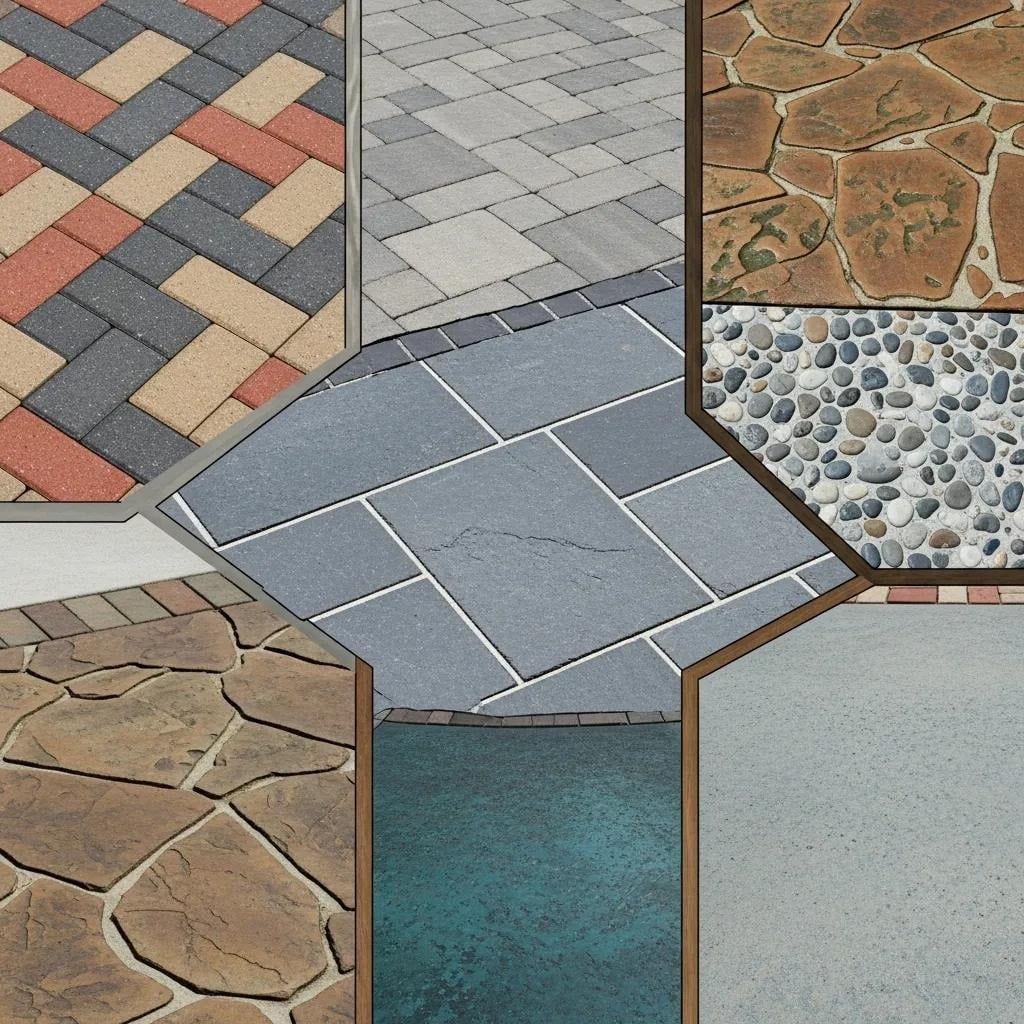
Pavers offer broad design freedom with many unit sizes, shapes, colors and textures—letting you create herringbone, basketweave, or mixed modular patterns for visual depth. Poured concrete can mimic many looks with stamping, staining, exposed aggregate, or sawcut patterns, but it’s more limited for multi‑material mosaics and the tactile variation found in natural stone or porcelain. The table below summarizes common finishes and where they work best. Design choices also affect transitions to adjacent elements like artificial turf, planting beds, and decking, so thinking about materials together is key to a cohesive outdoor space.
| Material / Finish | Design Options | Typical Applications |
|---|---|---|
| Interlocking Concrete Pavers | Varied shapes, colors, and patterns | Patios, driveways, walkways |
| Natural Stone Pavers | Irregular texture and premium look | High-end patios, pool decks |
| Porcelain Pavers | Sleek surfaces, thin profiles | Modern patios, commercial terraces |
| Poured Concrete Slab | Stamped, stained, exposed aggregate | Simple patios, seamless outdoor kitchens |
What design patterns, colors, and textures are available for pavers compared to slabs?
Pavers give a wide palette: herringbone and basketweave add structural interlock and visual rhythm for driveways and patios, while mixed modular layouts create contemporary, organic compositions. Color trends for 2025 lean toward neutral grays, warm earth tones, and blended mixes that pair well with minimalist planting and artificial turf. Slabs can imitate some looks through stamping or colored overlays—stamped concrete can suggest stone or tile—but they don’t match the tactile depth of natural stone or porcelain. When choosing finishes, consider slip resistance, pool safety, and how the surface will look next to plantings and turf.
Top paver patterns for 2025 include:
- Herringbone — strong interlock and clean visual rhythm.
- Modular mixed‑size layouts — contemporary, layered compositions.
- Running bond — understated, linear patios.
Next, we’ll look at how these materials work with other outdoor features.
How do slabs and pavers integrate with outdoor living features like patios and walkways?
Pavers make multi‑material transitions easy: cut units form neat edges against turf, planting beds, or decking, and border courses create clear visual thresholds. Slabs need planned sawcuts, edging, or insets to achieve similar transitions, so early coordination is important. Edge treatments—metal or concrete curbs, gravel joints, or turf insets—also affect drainage and maintenance, so choose compatible materials to minimize future work. Practical layout tips: use a contrasting tracer band between turf and dining patios, design gentle slopes for positive drainage, and specify solid edge restraints to stop lateral movement—these details improve both how the space looks and how it performs.
What Are the Best Applications for Slabs and Pavers in Outdoor Living Spaces?
Your application determines the right surface: driveways need load capacity and durability; pool decks demand slip resistance and cool surface performance; pet areas require easy cleaning and good drainage. Pavers are a great choice where movement, permeability, or modular repairs matter; slabs work well for large, seamless surfaces and certain outdoor kitchens where continuous planes are preferred. Review the use‑case trade‑offs below to guide material and structural decisions.
Which is better for driveways, patios, walkways, and pool decks?
Driveways with frequent vehicle traffic usually need thicker, reinforced slabs or high‑quality interlocking pavers over a robust base; both systems can work when engineered to meet load requirements, but pavers make local repairs easier for wheel tracks or settlement. Patios value aesthetics and comfort, so either pavers or decorative slab finishes fit depending on style; pavers offer more pattern options. Walkways often use thinner pavers over compacted bases for pedestrian loads, while pool decks demand textured, slip‑resistant finishes and attention to thermal performance—light‑colored pavers or textured slab finishes help reduce heat. Each application requires the right base thickness, edge restraint, and surface finish for safety and longevity.
How do pavers and slabs perform in pet-friendly and commercial environments?
Pet‑friendly yards benefit from permeable pavers and clean turf transitions that improve drainage and simplify cleaning; slabs also work where a seamless surface makes waste removal and pressure washing easier. Commercial projects need durable finishes, higher load tolerances, and predictable maintenance schedules; engineered paver systems with manufacturer warranties or reinforced slab designs are common choices. For pet areas, choose joint materials that don’t trap odors and surfaces that drain well to avoid standing moisture. Combining hardscape zoning with turf and drainage planning creates practical, low‑maintenance layouts for both homeowners and businesses.
How Can Pavers Be Integrated with Artificial Turf for Low-Maintenance Outdoor Living Spaces?
Pairing pavers with artificial turf creates flexible, low‑maintenance yards that balance a durable walking surface with the evergreen look and pet‑friendly feel of synthetic grass. Typical integrations include border courses, stepping‑stone paths, and dedicated pet zones where pavers provide solid footing and turf offers a soft play area. Using permeable pavers or drained bases improves drainage. Design examples: a paver path around a turf play zone, a paver grilling pad next to turf, or paver islands set inside turf for visual interest. These combos reduce soil and leaf migration into turf and make cleaning easier—especially helpful for pet owners and busy households.
- Improved drainage and less standing water when permeable paving or drained bases are used.
- Zoning that separates heavy‑use corridors from lounging turf, simplifying cleaning and repairs.
- Cleaner transitions for pet hygiene—pavers make waste removal easier while turf gives a comfortable play surface.
Next we’ll cover how professionals coordinate these systems for a seamless result.
What are the benefits of combining pavers with pet-friendly artificial turf?
Combining pavers and pet‑friendly turf creates clear, functional zones that reduce maintenance: pavers serve as durable corridors for high traffic and cleaning, while turf offers a soft, maintenance‑free green area. Proper edge details and base layers prevent turf infill from migrating into paver joints, cutting down long‑term joint maintenance. For pet areas, this pairing supports cleaning routines—pressure washing pavers and rinsing turf drains—while permeable paver options improve stormwater handling. These practical benefits are especially useful in compact urban or Bay Area yards where efficient use of space and minimal upkeep are priorities.
How does Heavenly Greens’ expertise enhance outdoor living with paver and turf solutions?
Heavenly Greens specializes in artificial turf and offers paver solutions as part of its residential services, so you can get coordinated turf‑and‑hardscape designs from a single team. Our experience combining turf with hardscapes ensures proper base prep, edge details, and drainage so pavers remain serviceable and turf stays clean over time. For homeowners who want a one‑stop approach, Heavenly Greens provides estimates and design guidance tailored to site conditions, material choices, and pet‑friendly layouts. Requesting a project estimate is a practical next step if you want a cohesive, low‑maintenance backyard that blends artificial grass and paver surfaces.
- Heavenly Greens can evaluate site‑specific drainage and base needs to recommend permeable or conventional paver systems paired with turf.
- We coordinate turf and paver installation sequencing to minimize rework and ensure neat transitions.
- One‑vendor estimates and proposals simplify budgeting and scheduling for combined projects.
These service options keep the guide focused on choices while offering a clear path for readers who want professional help with integrated installations.
Frequently Asked Questions
What are the environmental impacts of using pavers versus concrete slabs?
Pavers can be a greener choice when they’re permeable, because they let rainwater soak into the ground, reducing runoff and helping groundwater recharge. Some pavers are also made with reclaimed or recycled materials. Concrete slabs are durable but can increase heat‑island effects and require energy to produce. Choosing permeable systems, recycled materials, and thoughtful site design improves sustainability for either option.
How do pavers and slabs perform in extreme weather conditions?
In extreme conditions, pavers usually handle movement better because joints let units expand and contract without cracking. Properly installed pavers are less prone to freeze‑thaw damage, though poor installation can lead to shifting or uneven surfaces. Slabs are strong under compression but can crack from thermal stress or ground movement. Correct installation and maintenance matter most for durability in harsh climates.
Can pavers be installed over existing concrete slabs?
Yes—pavers can be installed over an existing slab if the slab is structurally sound and properly prepared. This approach can save demolition time and cost, but the slab should be level and free of major cracks. A leveling layer of sand or gravel is commonly added to create a suitable base and ensure drainage. Consult a pro to confirm the slab’s condition and to design a reliable overlay.
What are the best practices for maintaining pavers and slabs?
Paver upkeep includes regular cleaning, keeping joints topped with sand or polymeric material, and checking for settling or movement. For slabs, routine cleaning, periodic sealing, and prompt crack repair help prevent water damage and deterioration. Both surfaces benefit from scheduled inspections and timely fixes to extend life and appearance.
How do installation times compare between pavers and concrete slabs?
Installation time varies by scope and complexity. Poured concrete needs forming, pouring and curing—so usable time can be delayed while curing completes. Pavers don’t require curing and can often be occupied sooner after installation, but intricate patterns or large areas take longer to lay. Area size and design complexity will influence the total timeline for either option.
Are there specific design trends for pavers and slabs in 2025?
For 2025, paver trends lean toward natural, earthy palettes and mixed‑size modular patterns that blend with planting and turf. Herringbone and modular layouts remain popular. For poured concrete, stamped and stained finishes that mimic stone or wood are in demand for a more organic look. Integrating pavers with artificial turf continues to grow as homeowners seek low‑maintenance, cohesive outdoor living spaces.
Conclusion
Choosing between slabs and pavers shapes cost, durability, and style for your outdoor areas. Pavers give design flexibility and simpler, targeted repairs; slabs deliver a smooth, lower‑cost surface for straightforward projects. Matching the right material to your site conditions, use patterns, and maintenance expectations leads to the best long‑term outcome. If you’d like help planning a turf‑and‑hardscape project, Heavenly Greens can provide design options and estimates to bring your backyard vision to life.


