
Many San Jose homeowners must adapt their yards to an arid climate. Drought-resistant landscaping conserves water and improves both appearance and usability. This article reviews the benefits of drought-tolerant plants, maintenance needs, design principles, including xeriscaping, and suitable irrigation and hardscape options. With these elements in place, homeowners can establish attractive, functional outdoor spaces that prosper in dry conditions.
San Jose has a Mediterranean-type climate, with wet winters and dry summers typical. That seasonal pattern favors species and landscape strategies that store or conserve moisture during the warm season and reduce reliance on supplemental irrigation. Thoughtful dry-yard conversions can lower long-term costs, reduce outdoor maintenance time, and create resilient gardens that support local ecology.
Benefits
Drought-resistant plants provide clear environmental and practical benefits. They need substantially less water than conventional landscaping, lowering consumption and maintenance. In addition, these species support local wildlife and reduce reliance on chemical fertilizers and pesticides.
Many drought-tolerant plants are native to California and are well-suited to local soil and climate conditions. As a result, they require less care while enhancing landscape aesthetics. Choosing these plants delivers an attractive, cost-effective, and environmentally responsible garden.
Beyond water savings, drought-adapted landscapes can improve neighborhood resilience by reducing stormwater runoff and heat retention associated with irrigated turf. Combining drought-tolerant planting with permeable surfaces and shade structures helps moderate microclimates around the home, improving comfort and outdoor usability during warm months.
Heavenly Greens, a San Jose-based landscaping supplier, provides sustainable, drought-tolerant plants, irrigation components, and hardscape materials tailored to dry-yard conversions. Their product range supports homeowners seeking practical, water-wise outdoor living areas.
Maintenance Requirements
Drought-resistant landscapes usually demand less labor than traditional gardens but still require proper establishment and periodic care. New plantings need regular irrigation until roots develop; thereafter, water needs decline. Preparing well-draining, nutrient-balanced soil helps plants adapt to drier conditions.
Mulch plays a central role in maintenance by preserving soil moisture, suppressing weeds, and moderating temperature. Owners should learn the specific requirements of the chosen species and monitor for pests and diseases to preserve plant health.
Proper establishment is the single most important maintenance task. This includes correct planting at the correct depth, initial deep watering to encourage root growth, and a short period of more frequent irrigation as the plant becomes established. After the establishment period, reduce irrigation frequency and increase duration to encourage deeper rooting, which increases drought resilience.
| Maintenance Task | Description | Frequency |
|---|---|---|
| Initial Watering | Water newly planted drought-resistant plants to establish roots. | Weekly for the first month |
| Soil Preparation | Amend soil with organic matter to improve drainage and nutrient content. | Once before planting |
| Mulching | Apply a layer of mulch to retain moisture and suppress weeds. | Annually |
The table highlights foundational maintenance tasks: initial watering, proper soil preparation, and annual mulching to support long-term plant health.
In addition to the tasks shown, seasonal checks are useful. Spring, inspect irrigation systems and refresh mulch. In summer, monitor plant stress and briefly adjust irrigation if extreme heat occurs. Autumn, remove spent annuals and check for early pests. In winter, prune sparingly and avoid heavy fertilization when plants are dormant.
For ongoing upkeep, create a written maintenance calendar that lists irrigation check dates, pruning windows for specific species, and reminders to refresh mulch. A calendar helps retain the low-maintenance benefits of drought-tolerant landscapes while ensuring long-term health and appearance.
Design Considerations
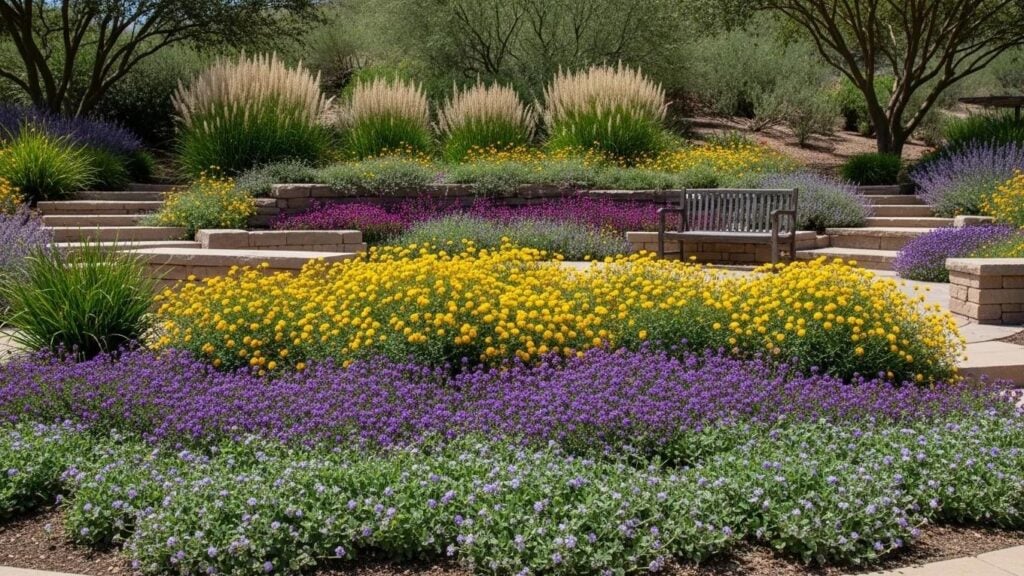
Effective drought-resistant design balances function and form. Prioritize native and drought-tolerant species that match your yard’s sun exposure and soil. Use layering—taller plants at the rear, shorter in front—to create depth and visual interest.
Consider how you will use the outdoor space—entertaining, gardening, or relaxation. Integrate pathways, seating, and hardscape elements to define zones while complementing drought-tolerant planting.
Successful composition depends on repetitive use of plant textures and colors to create cohesion. Combine woody shrubs for structure, perennial flowering plants for seasonal interest, ornamental grasses for movement and texture, and succulents for low-water groundcover and focal points. Repeating groups of three to five plants creates visual rhythm and simplifies maintenance.
When planning, pay attention to wind and sun exposure. Place more heat-tolerant, sun-loving species in exposed areas and reserve sheltered microclimates for species that prefer some afternoon relief. Use hardscape elements—walls, terraces, and raised beds—to create microclimates and retain soil moisture where needed.
How Do Drought-Tolerant Plants Conserve Water and Enhance Outdoor Usability?
Drought-tolerant plants conserve water through traits such as deep roots and reduced leaf transpiration. Features like waxy leaves or fine hairs limit evaporation. These adaptations allow homeowners to use outdoor spaces with lower irrigation demands.
By selecting appropriate plants and grouping species by water needs, homeowners can allocate irrigation selectively. This targeted approach reduces waste and keeps frequently used areas, like patios and paths, attractive and usable with minimal upkeep.
Which Native and Xeriscape Plants Thrive in San Jose’s Dry Climate?
Several native and xeriscape species perform well in San Jose’s dry climate. Recommended examples include:
- California Poppy: This vibrant flower is drought-tolerant and attracts pollinators.
- Lavender: Known for its fragrance, lavender thrives in dry conditions and requires minimal maintenance.
- Manzanita: This evergreen shrub is not only drought-resistant but also provides year-round interest with its unique bark and foliage.
These selections enhance landscape appearance and provide habitat for local wildlife while requiring limited resources.
Additional planting options that work well in xeriscape palettes include various sages (Salvia species) for color and pollinator value, low-growing succulents for groundcover and texture, and ornamental grasses for movement. When choosing species, consider mature plant size and water grouping to avoid overplanting and to simplify irrigation zones.
How Can Xeriscape Landscaping Transform Dry Yards into Sustainable Outdoor Living Spaces?
Xeriscaping emphasizes water conservation through drought-adapted plants and efficient irrigation. Applying its principles converts dry yards into low-water, low-maintenance outdoor living areas and reduces the environmental footprint of landscaping.
Further emphasizing the comprehensive nature of this approach, research highlights xeriscape as an integrated design and management framework for sustainable water use.
Xeriscape: Integrated Design for Drought-Adaptive Landscaping & Water Management
Xeriscape (drought-adaptive landscaping) provides an integrated design-and-management framework to reduce irrigation demand through climate-appropriate planning, hydro zoning, soil improvement, mulching, efficient irrigation, and maintenance practices. This review synthesizes international and Turkish evidence on xeriscape in the context of sustainable urban water management and water-sensitive city (WSC) agendas.
Evaluation of The Xeriscape Approach in The Context of Sustainable Water Management, 2025
Core xeriscape principles include selecting appropriate plants, applying efficient irrigation, and managing soil effectively. Complementary hardscape features, such as gravel paths and stone patios, increase usability while reducing reliance on water-intensive lawns.
These foundational elements are further elaborated by specific principles that guide effective xeriscape design.
Seven Water-Saving Principles of Xeriscape Landscaping Design
The seven water-saving principles of Xeriscape landscaping are: appropriate planning and design, soil analysis and improvement, appropriate plant selection, practical turf areas, efficient irrigation, mulching, and appropriate maintenance. These principles are applied in real estate and residential landscape master planning and design, all of which are important for water conservation.
Xeriscape in landscape design, M Özyavuz, 2012
What are the key principles of Xeriscape Design for San Jose Homeowners?
Homeowners implementing xeriscaping should follow three key steps:
- Right Plant, Right Place: Select plants suited to your yard’s specific conditions, including sun exposure and soil type.
- Soil Preparation: Improve soil quality to enhance water retention and drainage.
- Water Conservation Techniques: Utilize efficient irrigation systems, such as drip irrigation, to minimize water waste.
Applying these principles helps create a resilient, low-water landscape suited to San Jose’s conditions.
Hydrozoning—grouping plants according to water needs—is especially effective. Group plants with similar irrigation needs and design separate irrigation zones for each group. This increases irrigation efficiency and reduces plant stress caused by over- or under-watering.
How Does Xeriscaping Reduce Maintenance and Support Eco-Friendly Gardens?
Xeriscaping lowers ongoing maintenance by using plants adapted to dry conditions, thereby reducing watering, fertilizer use, and pest interventions. It also promotes biodiversity and decreases the carbon footprint of conventional landscaping.
Beyond environmental benefits, studies also demonstrate the tangible economic advantages and resource savings associated with xeriscaping.
Xeriscape vs. Zeroscape: Energy-Water Savings & Low-Water Plants
Data derived from computer simulations using three full-sized landscapes around identical buildings in Phoenix and Tucson indicated that these “zeroscapes” were uneconomical compared with “xeriscapes,” which use low-water-use plants located positioned for summer shade. Projected total energy-water savings for the xeriscapes ranged from $117 to $124 (15 to 22 percent) in Phoenix and $38 to $59 (8 to 15 percent) in Tucson, compared with the zeroscapes.
Modeling residential landscape water and energy use to evaluate water conservation policies, EG McPherson, 1990
Designing landscapes that use less water and fewer chemicals delivers environmental gains and cost savings while preserving an attractive outdoor setting.
What Sustainable Irrigation Systems Are Best for Dry Yard Landscaping in San Jose?
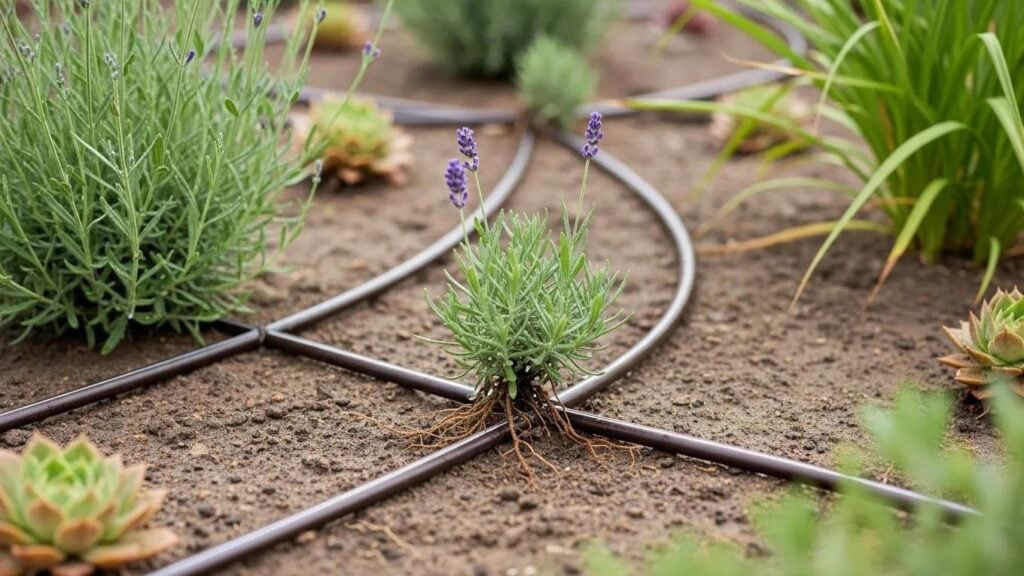
Choosing the appropriate irrigation system is essential for long-term water efficiency. Sustainable options include drip irrigation and weather-responsive smart systems that limit waste and target plant root zones.
- Drip Irrigation: This system delivers water directly to plant roots, minimizing evaporation and runoff.
- Smart Irrigation Systems: These systems use sensors to adjust watering schedules based on weather conditions, ensuring optimal water use.
How Do Drip and Smart Irrigation Systems Optimize Water Use?
Drip systems supply a slow, consistent water flow to root zones, reducing runoff and encouraging deep rooting. Smart systems monitor soil moisture and weather to adjust schedules, ensuring plants receive water only when needed.
Combining both approaches often delivers the best results: use drip irrigation for planting beds and shrubs, and deploy smart controllers that react to local weather data or soil moisture sensors to avoid unnecessary cycles. This layered strategy keeps plants healthy while preventing excess consumption.
What Are Installation and Maintenance Tips for Efficient Irrigation?
To maintain irrigation efficiency, follow straightforward practices:
- Regularly Check for Leaks: Inspect hoses and connections for leaks to prevent water waste.
- Adjust Sprinkler Heads: Ensure sprinkler heads are positioned to water plants directly, avoiding sidewalks and driveways.
- Schedule Watering Wisely: Water early in the morning or late evening to minimize evaporation.
Implementing these measures preserves water and supports a healthy drought-resistant landscape.
Additional practical tips for installation include using filters and pressure regulators in drip systems, selecting appropriate emitter flow rates for different plant types, and zoning irrigation based on plant water needs. Label valves and keep a simple system map to make seasonal adjustments easier and to speed troubleshooting.
During the first year after installation, observe how quickly different zones dry out and adjust run times accordingly. After plants mature, reduce frequencies and consider occasional deep soakings to maintain deep root systems rather than frequent surface wetting.
Which Hardscape Materials Enhance Functionality and Aesthetics in San Jose Dry Yards?
Well-chosen hardscape materials improve usability and complement drought-tolerant planting. Common effective options are permeable pavers, crushed rock, and natural stone, each offering durability and low water impact.
- Permeable Pavers: These allow water to infiltrate the ground, reducing runoff and promoting groundwater recharge.
- Crushed Rock: This material can be used for pathways and decorative features, providing a natural look while minimizing water use.
- Natural Stone: Durable and visually appealing, natural stone can be used for patios, walls, and other structures.
What Durable and Eco-Friendly Hardscape Options Suit San Jose’s Climate?
Select durable, eco-conscious materials, such as permeable pavers, that promote water infiltration. Where feasible, source materials locally to reduce transport-related emissions.
Consider material texture and thermal properties when designing seating or gathering areas. Light-coloured stones reflect heat, helping to maintain comfortable temperatures underfoot. Use edging and low retaining walls to transition between planted and paved areas while providing seating and structure.
How Can Hardscape Design Complement Drought-Tolerant Landscaping?
Thoughtful hardscape design—pathways, seating, and focal features—defines usable zones and enhances the landscape’s functionality. Align hardscape placement with plantings to create a cohesive, low-water outdoor environment.
Integrate permeable surfaces near planted areas to allow rain and irrigation water to percolate into the soil rather than run off. Use steps, terraces, and swales to manage elevation changes and water movement; these elements can add visual interest while supporting plant health.
How to Design and Maintain Outdoor Living Spaces That Thrive in San Jose’s Dry Conditions?
Designing resilient outdoor living areas requires deliberate plant selection, efficient irrigation, and a practical layout that supports intended uses such as entertaining or gardening.
What Are Creative Patio Landscaping Ideas for Water-Wise Outdoor Spaces?
Use containers of succulents or native plants to introduce color and texture to patios. Choose permeable patio materials to support water management while maintaining a refined appearance.
Add comfortable, low-maintenance furniture and shade solutions, such as a pergola or sail shade, to extend usable hours without increasing irrigation. Incorporate potted herbs and fragrant shrubs near seating to create scent-rich zones that require little water but reward use.
What Are The Best Practices for Maintaining Drought Resistant Landscapes Year-Round?
To maintain a drought-resistant landscape year-round, homeowners should:
- Monitor Water Needs: Adjust watering schedules based on seasonal changes and rainfall.
- Prune Regularly: Keep plants healthy and encourage growth by pruning dead or overgrown branches.
- Mulch Annually: Refresh mulch to retain moisture and suppress weeds.
Consistent attention to watering, pruning, and mulching keeps drought-tolerant gardens healthy and attractive over time.
In addition, perform annual tasks such as soil testing every few years to check nutrient status, tune irrigation controllers before the dry season, and inspect drainage paths to ensure water moves where intended. Small seasonal efforts preserve the low-maintenance advantage of drought-tolerant landscapes.
What Local Resources and Support Are Available for Sustainable Landscaping in San Jose?
San Jose homeowners can access guidance from local agencies, environmental organizations, and online resources detailing water-saving landscaping practices and suitable plant selections.
How Does Heavenly Greens Support Homeowners with Drought-Tolerant Products and Expertise?
Heavenly Greens provides drought-tolerant plants, irrigation systems, and hardscape materials, along with expert guidance on sustainable landscaping. Their services help homeowners implement practical, water-wise solutions that suit the local climate.
To explore the range of drought-tolerant plants and landscaping solutions, consider reaching out to Heavenly Greens.
Where to Find Up-to-Date Drought Data and Landscaping Guidelines in San Jose?
For current drought information and planting guidance, consult local government resources and reputable environmental groups. These sources provide practical recommendations for water conservation and suitable species for dry conditions.
Local water agencies and extension services commonly publish planting guides, irrigation tips, and lists of native or climate-adapted plants. Many jurisdictions also offer workshops or online webinars on water-wise landscaping and may provide information about available rebates for irrigation upgrades or lawn conversions.
Frequently Asked Questions
What are the best practices for selecting drought-resistant plants?
Choose native species adapted to your local climate and soil. Prefer plants with deep root systems and staggered bloom times for seasonal interest. Group species with similar water needs to simplify irrigation and maintenance.
How can I improve soil quality for drought-resistant landscaping?
Begin with a soil test to assess pH and nutrient levels. Amend the soil with organic matter, such as compost, to improve structure, drainage, and nutrient content. Use mulches and, where appropriate, soil conditioners to enhance water retention.
What role does mulch play in drought-resistant landscaping?
Mulch reduces soil evaporation, suppresses weeds, and moderates temperature. Organic mulches also add nutrients as they decompose. Replenish mulch periodically to maintain these benefits.
How can I create functional outdoor spaces with drought-resistant landscaping?
Define intended uses and add hardscape elements—paths, patios, seating—to establish zones for relaxation or entertainment. Select drought-tolerant plants that complement these features and use layering to enhance visual depth.
What are the benefits of using smart irrigation systems?
Smart irrigation systems use sensors and weather data to optimize watering schedules, reducing waste while promoting plant health. They can prevent overwatering, lower water bills, and offer remote control for convenience.
What local resources are available for sustainable landscaping in San Jose?
Local government agencies, community workshops, and online publications guide drought-tolerant practices. Nurseries and landscape professionals, including Heavenly Greens, can offer region-specific advice and products.
Conclusion
Converting dry yards in San Jose to drought-resistant landscapes conserves water and improves outdoor function and appearance. By applying xeriscape principles and selecting appropriate plants and materials, homeowners can create sustainable, attractive spaces. Learn more about drought-tolerant options and expert guidance from Heavenly Greens.
A successful conversion combines careful plant selection, smart irrigation, considered hardscaping, and modest seasonal maintenance. Over time, these choices reduce water use, support local wildlife, and create outdoor spaces that are both enjoyable and resilient. Whether starting with a small patio garden or redesigning an entire yard, incremental changes—planned and executed with local conditions in mind—produce lasting, water-wise results.


