
AstroTurf is a historic brand of artificial grass first introduced in 1966 and long associated with synthetic playing surfaces. As modern synthetic grass options have advanced, distinguishing traditional AstroTurf from contemporary products is important for sports fields, landscaping, and recreation. This article reviews AstroTurf’s origins, traces its development, and compares materials and construction to modern alternatives. It also outlines benefits, installation cost factors, and typical applications to help prospective buyers reach a well-informed decision.
Overview of AstroTurf
AstroTurf is a brand synonymous with synthetic turf. Initially developed for sports venues, its use has expanded to residential and commercial landscapes. The original goal was to deliver a consistent, hard-wearing surface that reduced maintenance. Early success in stadiums and schools encouraged ongoing improvements across the synthetic turf sector.
Over the decades, the term “AstroTurf” became shorthand for any synthetic playing surface, though product families and manufacturer approaches vary widely. When evaluating a project, it is useful to separate brand history from material and construction characteristics so that choices reflect current product capabilities rather than legacy reputation alone.
Common applications for synthetic turf include community sport fields, private lawns, rooftop gardens, pet areas, playgrounds, and commercial landscaping. Each application places different demands on the turf — from shock absorption and drainage for sports fields to pet-friendly infill and durability for residential yards — so accurate comparison requires matching product features to intended use.
What Is AstroTurf and How Did It Originate?
The name “AstroTurf” refers to synthetic grass made from plastic fibers designed to resemble natural grass. It debuted in 1966 at the Houston Astrodome as the first non-natural playing surface installed in an indoor stadium—the product aimed to provide a durable, low-maintenance alternative capable of withstanding professional sports use.
When and why was AstroTurf first introduced?
AstroTurf addressed the limitations of natural grass in many sporting venues, where wear and tear undermined playability. It was introduced for its resilience and consistent surface characteristics, reducing the upkeep required for natural turf. This innovation offered schools and amateur leagues a durable option that retained reliable playing conditions.
Beyond sports, early adopters appreciated the predictable surface that synthetic turf provided in locations where sunlight, irrigation, or soil quality made natural grass impractical. That consistency in performance — often achievable with lower daily maintenance — helped synthetic turf gain traction in a variety of settings.
How has AstroTurf evolved?
Over the years, AstroTurf has undergone technological improvements that have enhanced texture, appearance, and performance. Early versions used a dense, short pile that could be abrasive. Current products offer a variety of blade heights and textures for a more natural look and feel. Manufacturers have also reduced infill requirements and improved drainage, increasing comfort and safety for users.
Advances in polymer chemistry, ultraviolet stabilizers, and tufting or extrusion techniques have all contributed to a more realistic appearance and better in-field behavior. Modern manufacturing pays closer attention to fiber cross-sections, color blending, and surface resilience, ensuring new installations are visually convincing and more functional underfoot than natural turf.
What Are the Key Material and Construction Differences Between AstroTurf and Modern Artificial Turf?
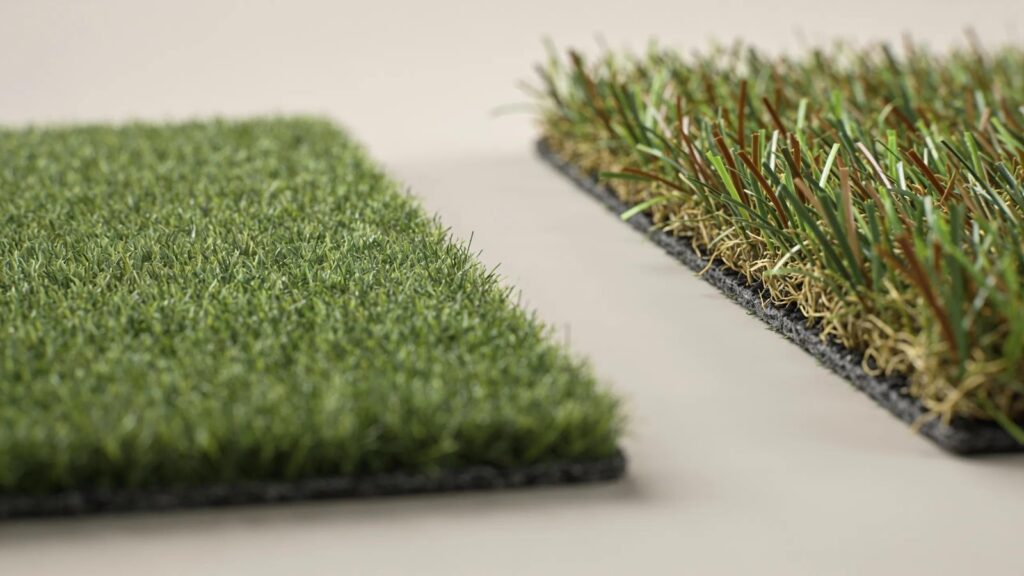
The materials and construction techniques differ notably between AstroTurf and modern artificial turf, affecting performance, durability, and sustainability. Traditional AstroTurf relied on a basic monofilament and tufted construction, while contemporary options use advanced materials and engineered constructions that more closely replicate natural grass.
Modern products are designed as systems rather than single-layer carpets: engineered fibers, backing layers, infill choices, and sometimes shock pads are specified to work together. This system approach improves long-term performance and makes it easier to tailor installations to the demands of a particular site.
What materials make up traditional AstroTurf versus modern synthetic grass?
Traditionally, AstroTurf was made from synthetic materials such as polyethylene, creating a durable surface that felt less natural. In contrast, modern synthetic turf commonly uses advanced polymers like polyethylene and polypropylene to improve appearance and performance. Hybrid systems and enhanced UV stabilizers also extend lifespan and reduce visible aging, making contemporary products more suitable for many installations.
Infill materials have also diversified. Early installations used heavier infill or no infill at all; today’s options include sand, coated sand, organic infill, and engineered alternatives selected to balance stability, drainage, and environmental preferences. The choice of infill affects surface softness, heat retention, and maintenance needs.
How do construction methods impact durability and performance?
Construction techniques have advanced to include tufting, extrusion, and improved infill systems. These methods increase longevity and adaptivity to conditions such as extreme weather. Together with better materials, modern construction improves drainage, reduces heat retention, and sustains consistent play and appearance over time.
Backing systems and seam technology have also improved, reducing seam visibility and the risk of delamination. Modern backing materials are engineered to improve moisture permeability and dimensional stability, thereby supporting field drainage and helping prevent premature failure in wet climates.
What Are the Benefits of Modern Artificial Turf Compared to AstroTurf?
Modern artificial turf offers clear advantages over traditional AstroTurf in durability, maintenance, and environmental performance. These improvements make contemporary products preferable for many property owners and facility managers.
Beyond those headline improvements, modern turf frequently offers a wider range of aesthetic choices — blade shapes, color mixes, and pile heights — enabling designers to match the look of a natural lawn better or to create performance-optimized sports surfaces.
How does modern artificial turf provide enhanced durability and UV resistance?
Modern turf uses engineered fibers and stabilizers that resist fading and wear caused by UV exposure. As a result, surfaces retain appearance and performance longer. Manufacturers also design systems that reduce slippage and abrasive contact, improving safety and user comfort.
Careful selection of fiber polymers and advanced stabilizers reduces brittleness and breakage from sun exposure, while blended pigmentation and multi-tone yarns help conceal wear and maintain a natural appearance. These design choices extend the useful life of outdoor installations.
In what ways does artificial turf require less maintenance than AstroTurf?
Contemporary artificial turf requires less regular maintenance than older AstroTurf products. While traditional systems often required periodic infill replacement and intensive cleaning, modern options typically require only rinsing and occasional grooming. That reduces labor and ongoing costs for schools, municipalities, and commercial sites.
Routine maintenance for modern turf is straightforward and can be described in simple, repeatable tasks such as removing debris, brushing to lift fibers, and flushing with water where dust or spills occur. Following a regular, light maintenance plan preserves appearance and performance without specialized equipment.
How Environmentally Friendly Is Modern Artificial Turf Compared to AstroTurf?
Modern artificial turf has been developed with environmental considerations in mind. Many newer products incorporate recycled materials and are designed for recyclability, reducing landfill waste and supporting sustainable facility management practices.
Manufacturers and specifiers are also paying more attention to lifecycle planning: selecting materials that can be recovered at the time of replacement, designing for disassembly, and offering take-back or recycling programs where available. Such measures help reduce the long-term environmental footprint of artificial turf installations.
Which eco-friendly materials and certifications apply to modern turf products?
Several modern turf products carry sustainability certifications that document environmentally conscious manufacturing. Many use recycled inputs and comply with standards such as the Global Organic Textile Standard (GOTS), which signals adherence to recognized ecological and safety criteria. The products offered by Heavenly Greens reflect these developments.
In addition to certifications, look for suppliers that publish Environmental Product Declarations (EPDs) or provide clear information on recycled content and end-of-life handling. These disclosures make it easier to compare products on sustainability grounds and to assess trade-offs between durability and recyclability.
How does the lifecycle environmental impact of AstroTurf differ from modern artificial turf?
Lifecycle assessments indicate that traditional AstroTurf generally has a larger environmental footprint, in part because older products often end up in landfill. Modern options increasingly prioritize recyclability and reduced resource impact throughout production and disposal, supporting more responsible long-term stewardship.
Lifecycle impact is influenced by factors such as expected service life, replacement frequency, energy use in manufacturing, transport, and end-of-life disposal. Extending useful life through higher durability and adopting recycling pathways at replacement both reduce cumulative environmental effects over time.
Comparing Materials: AstroTurf vs. Modern Synthetic Grass
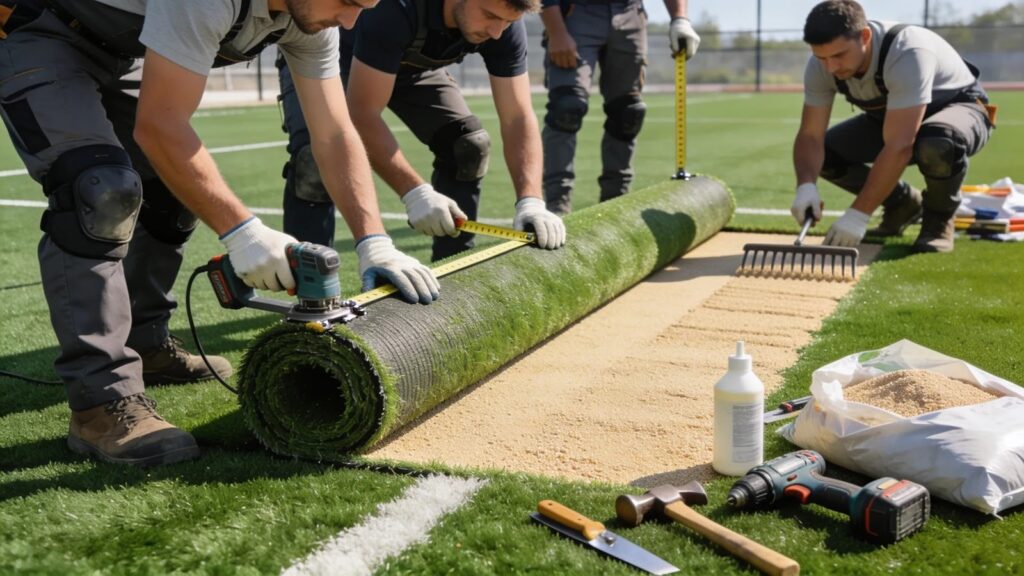
Installation costs for AstroTurf and modern artificial turf vary widely depending on material choice, site preparation, and regional pricing. Project scope and specific site requirements drive the final estimate.
Because installations are system-level projects, costs are influenced by preparatory work as much as by material price. A thorough site assessment before pricing helps reduce surprises and simplifies contractor comparisons.
What factors influence the cost of synthetic grass installation?
Key cost drivers include material quality, local labor rates and site-specific needs such as grading, drainage and access. Preparation work and installation complexity also affect the total cost.
- Site preparation: removal of existing surface, grading, base compaction and sub-base drainage preparation.
- Materials: turf quality, backing type, infill choice and any shock-pad systems or specialized adhesives.
- Labor and logistics: seamwork, edging, waste removal and transport to the site.
- Aftercare items: grooming equipment, warranty coverage and maintenance contracts.
Understanding the separate contributions of these items helps owners compare vendor quotes on a like-for-like basis and choose the solution that best matches functional goals and budget parameters.
How do AstroTurf installation costs compare to those for modern artificial turf?
Upfront installation costs for traditional AstroTurf may be lower, but ongoing maintenance expenses can add up. Modern turf often carries a higher initial price, yet its greater durability and reduced upkeep typically yield better long-term value.
When evaluating cost, consider the total cost of ownership: initial installation, expected maintenance over the surface’s life, and end-of-life replacement costs. Projects with higher usage demands often benefit from investing in more durable systems that lower cumulative maintenance and replacement frequency.
How Does the Durability of AstroTurf Compare to Modern Artificial Turf?
Modern artificial turf generally offers superior durability across a range of uses compared with traditional AstroTurf.
Durability differences are most evident in high-traffic scenarios, where abrasion resistance, infill stability, and backing integrity determine how quickly the surface shows wear. Modern designs reduce punch-through and strand breakage, preserving both playability and appearance.
What is the expected lifespan of AstroTurf versus modern synthetic turf?
AstroTurf commonly lasts around 8–10 years, depending on use and maintenance. High-quality modern synthetic versions can reach 15 years or more with proper care, making them a stronger long-term investment for many buyers.
Actual lifespan depends on intensity of use, climate, maintenance regime, and installation quality. Sports facilities with heavy daily use will see faster wear than residential lawns. Regular inspections and timely repairs of seams and edges help extend service life.
How do wear resistance and damage tolerance differ between the two turf types?
Modern turf uses advanced fibers and construction to resist wear and absorb impact better than older systems. This reduces the frequency of repairs and replacements, maintaining functionality for sports teams and property owners over a longer period.
Damage tolerance also depends on component compatibility. For example, a high-performance fiber paired with an inappropriate infill may still perform poorly. Integrated systems designed and tested together typically deliver the best combination of wear resistance and safety.
What Types of Synthetic Grass Are Available Beyond AstroTurf and Modern Artificial Turf?
There are a range of synthetic grass types beyond legacy AstroTurf and mainstream modern turf, each designed for specific performance and aesthetic needs.
Manufacturers offer purpose-built products tailored to particular constraints and priorities. Specifying the correct variety for the intended use is essential to achieving the desired balance among cost, appearance, and function.
What varieties of synthetic grass exist for landscaping, commercial, and sports applications?
Synthetic grass is offered in varieties tailored to distinct uses: pet-friendly products for homes, decorative grasses for visual appeal, and heavy-duty options engineered for commercial and sports applications. Choosing the right type ensures the installation meets functional and aesthetic requirements.
- Residential/landscaping turf: prioritizes visual realism, softer fibers, and lower pile heights for usability and curb appeal.
- Pet turf: designed for drainage, easy cleaning, and reduced odor retention, often paired with antimicrobial treatments or permeable infills.
- Playground and safety turf: includes shock-absorbent layers and impact-tested systems to reduce the risk of injury.
- Sports-specific turf: engineered for traction, ball roll, and player safety with options for infill and shock pads suited to particular sports.
- Putting-green turf: low-pile, smooth surfaces tuned for consistent ball roll.
How does Heavenly Greens’ synthetic turf selection address differing customer needs?
Heavenly Greens supplies a broad portfolio of synthetic turf solutions for residential landscaping and commercial sports facilities. Their range includes eco-conscious options that balance performance with sustainability. If you are considering a new project, their team is ready to assist.
When working with suppliers like Heavenly Greens, discuss intended use, expected traffic levels, drainage needs, and maintenance capacity. Request product data sheets and examples of past installations to verify that the chosen system performs well in comparable settings.
How Should You Choose Between AstroTurf and Modern Artificial Turf for Your Project?
Choosing the appropriate synthetic turf requires assessing intended use, budget, and maintenance capacity to ensure the chosen product meets performance and appearance goals.
What criteria should homeowners and businesses consider when selecting synthetic turf?
Homeowners and businesses should evaluate intended function, expected foot traffic, and available maintenance resources. Compare installation costs against projected upkeep to determine lifecycle value. Reviewing specific product features helps match aesthetic preferences with functional needs.
Ask potential suppliers for detailed warranty information, maintenance instructions, and references. Consider testing a sample on-site to assess color retention, pile resilience, and drainage performance under local conditions before committing to a full installation.
- Performance requirements: sports playability, pet-friendliness, or ornamental appearance.
- Site conditions: sun exposure, slope, drainage, and shade patterns.
- Maintenance capacity: who will perform regular care and how often.
- Sustainability goals: recycled content, recyclability, and certifications.
- Long-term value: expected service life relative to upfront cost.
Frequently Asked Questions
1. What is the difference between AstroTurf and modern artificial turf in terms of texture and feel?
AstroTurf traditionally features a denser, shorter pile that can feel more abrasive than modern synthetic grasses. Contemporary turf uses advanced fiber technology with varied blade heights and profiles to replicate the softness and visual complexity of natural grass, improving comfort for recreational and professional users.
Many modern products use multilayer constructions and fiber shapes that bend and recover, which help the surface feel more forgiving underfoot and reduce abrasion during slides or falls.
2. Are there health concerns associated with using AstroTurf?
Health concerns have been raised for some older AstroTurf products, notably regarding materials such as lead in historical formulations and potential exposure to crumb rubber infill. Modern synthetic turf manufacturers increasingly use non-toxic materials and safer infill options; always verify certifications and safety data when assessing a product.
When evaluating health considerations, request product safety data sheets and independent testing results. Consider alternative infill materials if crumb rubber is a concern, and ensure proper installation and maintenance to reduce dust and surface contaminants.
3. How do installation timelines compare between AstroTurf and modern artificial turf?
Installation timelines vary with project size and site conditions. AstroTurf installations may proceed more quickly when preparation is minimal, while modern systems can require additional groundwork, such as improved drainage. The specific scope and site preparation needs determine the overall schedule.
Allow time in project planning for site assessment, permitting where required, and any sub-base work. Seasonal factors, such as wet weather windows, can also affect the schedule and should be discussed with your installer up front.
4. What should you expect in terms of aftercare for modern artificial turf?
Aftercare for modern turf is straightforward: periodic rinsing to remove debris and occasional grooming to maintain fiber orientation. Many older AstroTurf systems required more intensive infill maintenance, a need that is reduced with current products. This lower demand for labor makes modern turf practical for busy settings.
A simple aftercare checklist: remove leaves and debris, brush high-traffic areas with a stiff broom or power brush, hose down to remove dust and spills, and inspect seams and edges annually for repairs. Address localized problems promptly to avoid larger repairs later.
5. Can synthetic grass be recycled, and how does this affect environmental sustainability?
Yes, many modern synthetic grass products are designed to be recyclable, which lowers their long-term environmental impact compared with older systems that typically end up in landfill. Increased recyclability supports waste reduction and contributes to circular-economy initiatives within the industry.
Recycling options vary by region and product type. When assessing sustainability, ask suppliers whether they offer take-back programs or whether local recycling facilities can accept turf components.
6. How do the shock-absorption characteristics of AstroTurf compare to newer synthetic turf options?
Newer synthetic turf systems commonly include enhanced cushioning and infill technologies that improve shock absorption and reduce injury risk. Traditional AstroTurf offered limited shock absorption, which could increase joint impact. Modern layering and infill approaches provide better protection for athletes.
For sports and playgrounds, consider systems that have been independently tested for impact attenuation and that meet relevant safety standards for the intended use. A qualified installer can advise on the appropriate combination of shock pad, infill, and fiber structure.
7. What environmental certifications should I look for in modern artificial turf?
Seek certifications such as the Global Organic Textile Standard (GOTS) or an Environmental Product Declaration (EPD) when evaluating modern turf. These verifications indicate responsible material use and manufacturing practices and help ensure the product meets recognized environmental and safety benchmarks.
Other helpful signals include documented recycled content, third-party testing results for heavy metals and volatile compounds, and supplier transparency about end-of-life handling. These indicators can help you compare environmental performance across competing products.
Conclusion
Understanding the differences between AstroTurf and modern artificial turf enables buyers to select products that balance performance, durability and sustainability. Modern solutions typically reduce maintenance, extend service life and offer eco-conscious options suited to a range of applications. Assess your specific needs and priorities to choose the best fit, and consider Heavenly Greens’ product range for solutions that match those requirements.
Before deciding, gather product data sheets, request sample swatches, and obtain multiple installation quotes that clearly separate materials from labor. That process will help ensure your chosen surface meets long-term expectations for performance, safety, and appearance.


