
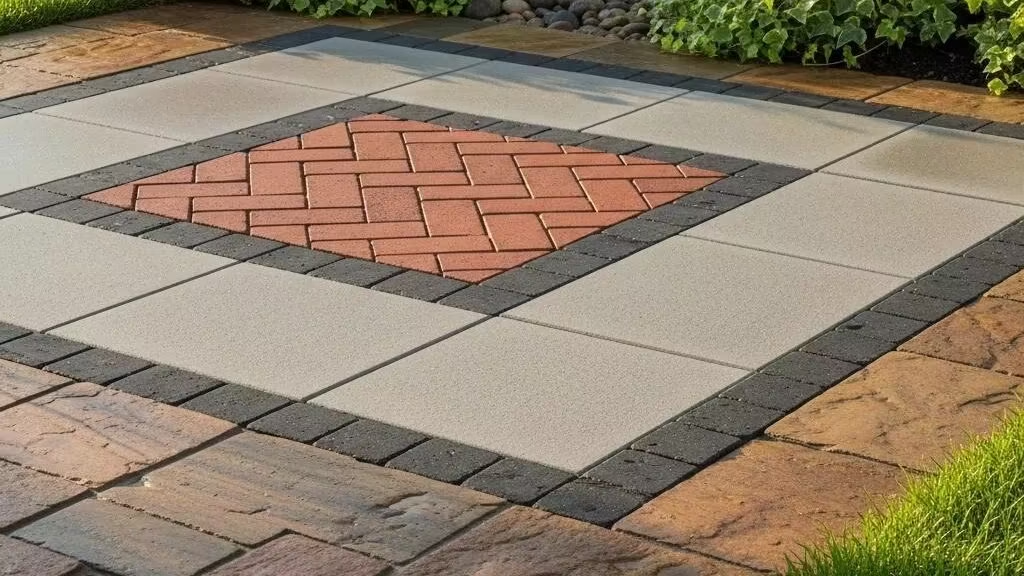
Pavers are individual hardscape units—made from concrete, clay, natural stone, porcelain, or permeable materials—laid in patterns over a prepared base to create durable outdoor surfaces for driveways, patios, walkways, and plazas. The right paver choice matters: material traits (porosity, compressive strength, surface texture) and proper installation (base depth, jointing, edge restraint) together determine durability, drainage, and upkeep.
This guide breaks down main paver categories, compares popular natural stones, reviews commercial and permeable systems for heavy-traffic sites, and outlines the cost drivers so you can compare options with confidence. You’ll also find pet-friendly design tips and a clear step‑by‑step installation overview that shows when to call a pro. Practical lists and comparison tables make it easy for homeowners, facility managers, and landscape pros to evaluate pavers and plan a realistic budget.
What Are the Main Types of Pavers Used in Installation Projects?
The primary paver types are concrete, brick (clay), natural stone, outdoor porcelain, and permeable paver systems. Each brings specific material properties and installation needs, and each fits different goals—load capacity, aesthetic style, stormwater control, or low maintenance. Concrete pavers are flexible and cost-efficient; brick pavers offer classic color and aging; natural stone delivers unique texture and a premium look; porcelain resists stains and soaks up very little water; and permeable systems reduce runoff through engineered bases. Knowing these categories helps you match durability, porosity, and finish to project needs like driveway load ratings, pool-deck slip resistance, or plaza drainage. Below is a quick comparison to speed decisions and answer common “which paver is best” questions.
This quick comparison table shows where each type is typically used, how durable it is, and rough per‑square‑foot price ranges to help narrow choices during early planning.
| Tier | Paver Type | Typical Applications | Durability | Broad Installed Cost Expectation |
|---|---|---|---|---|
| Good | Concrete Pavers | Driveways, patios, walkways | High; modular and repairable | Lower end of the $12–$20+ per sq ft range |
| Better | Brick (Clay) Pavers | Patios, walkways, traditional or historic looks | Long-lasting; naturally color-stable | Middle of the installed range depending on pattern & edging |
| Best | Natural Stone | Patios, pool decks, premium outdoor spaces | High; varies by stone type | Upper end of the installed range due to material + labor |
| Best | Porcelain Pavers | Modern patios, terraces, luxury designs | Very durable; stain- and fade-resistant | Upper tier due to material and advanced install requirements |
| Better–Best | Permeable Paver Systems | Driveways, plazas, areas needing drainage | Engineered for water flow; highly durable | Typically mid-to-upper range due to deeper base prep |
The table shows the trade-offs: concrete and brick are cost-competitive and easy to repair; natural stone and porcelain ask for a higher budget for a premium look; and permeable systems add environmental value by managing stormwater. If you’re planning a combined hardscape and synthetic turf project, Heavenly Greens includes pavers in its residential product offerings and can design seamless turf‑and‑paver layouts for livable outdoor spaces.
What Defines Concrete Pavers and Their Key Benefits?
Concrete pavers are manufactured from cement, sand, and aggregates and come in a wide range of shapes, textures, and colors. They interlock over a compacted base to spread loads and resist shifting. Factory production enables precise sizing and finishes that can mimic brick or stone while keeping material and replacement costs reasonable. Their modular design makes spot repairs simple—replace an individual unit without major demolition—and interlock systems can be engineered for vehicle loads on driveways. Routine joint‑sand upkeep and occasional sealing help retain color and extend life, making concrete a practical choice for homeowners balancing cost, looks, and performance.
That practical, repairable nature contrasts with a traditional option—clay brick pavers—which focus on long-term color and a distinct aesthetic.
How Do Brick Paver Options Compare in Style and Durability?
Brick pavers are kiln‑fired clay units prized for warm, earthy tones and aging that looks natural. Their color and hardness come from the firing process rather than surface coatings, so they keep their hue over time. Clay bricks typically offer solid compressive strength and good weather resistance, and they develop a patina many owners like for historic or cottage‑style landscapes. Proper installation needs a well‑prepared base and edge restraints to stop movement; in some freeze‑thaw climates, regional suitability matters. Maintenance is straightforward—cleaning, adding joint sand, and occasional sealing—and like concrete, individual bricks can be replaced when needed.
Which Natural Stone Paver Types Are Best for Different Outdoor Spaces?
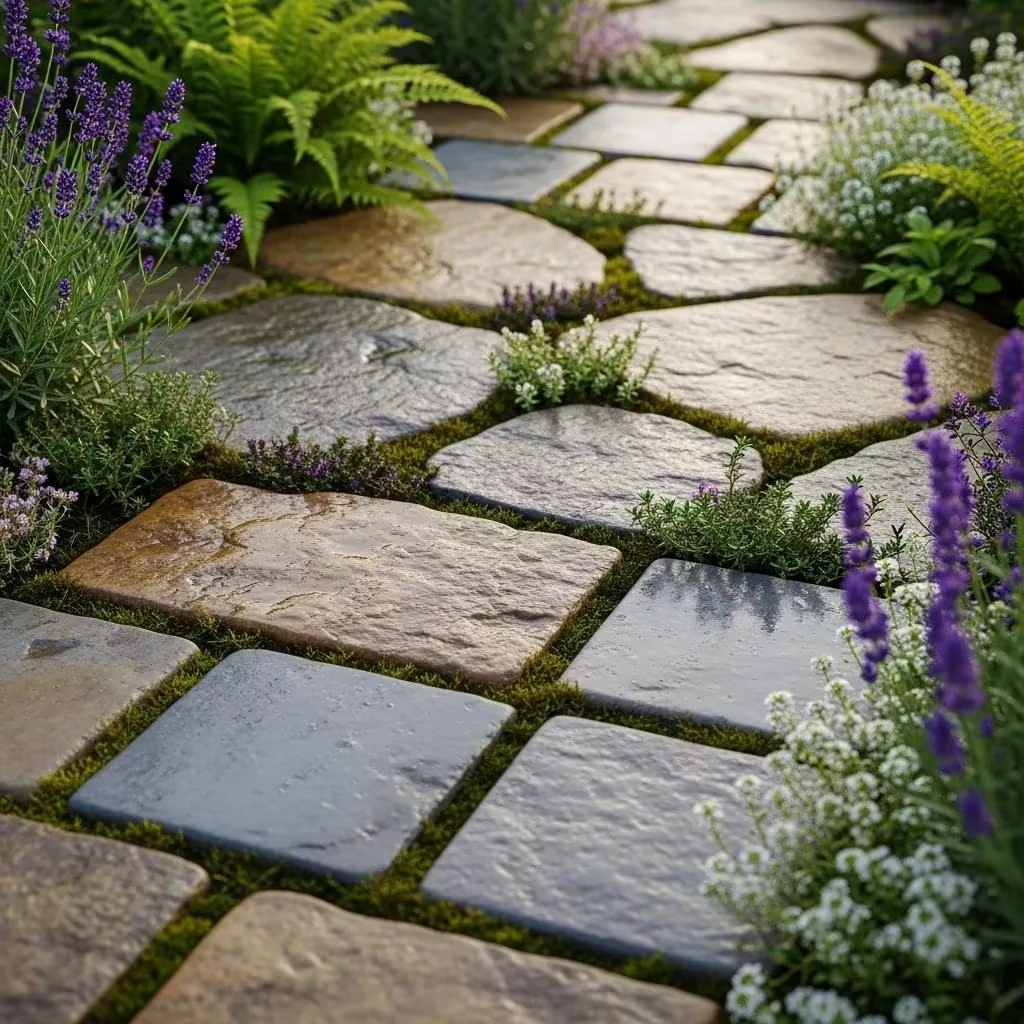
Natural stone pavers range from flagstone and bluestone to granite, limestone, and travertine—each with its own texture, slip resistance, color variation, and hardness. Flagstone and bluestone work well on patios and garden paths where a rustic or refined texture adds character; granite and dense limestone suit high‑load areas like driveways and commercial walkways. Think about porosity (and sealing needs), surface finish for poolside slip resistance, and quarry variability in color when choosing stone. Below we profile two common groups to help match appearance and function to each project area.
What Are the Characteristics of Popular Natural Stones Like Flagstone and Bluestone?
Flagstone is valued for irregular shapes and varied textures that fit informal patios, garden steps, and winding paths; the random joints create a relaxed, organic look. Bluestone uses denser, more uniform slabs with a blue‑gray palette ideal for polished patios and formal outdoor rooms; its consistent thickness makes leveling and installation easier. Both stones benefit from textured finishes in wet areas and periodic sealing to reduce staining and efflorescence while keeping color vivid. Keep in mind batch variability—color and grain can change between quarries—so order enough material and blend batches during installation for a consistent result.
How Do Granite, Limestone, and Travertine Pavers Differ in Use and Appearance?
Granite is one of the hardest natural stones—great for driveways, steps, and busy commercial areas where abrasion resistance is essential; its granular look and broad color range give a lasting, upscale appearance. Limestone offers a softer, cream‑to‑ash palette for patios and formal landscapes, with a smooth texture that often benefits from sealing to resist stains. Travertine is popular for pool surrounds because it stays relatively cool to the touch and can provide natural slip resistance when finished properly; it also shows characteristic veining and voids that may be filled during fabrication. Each stone’s traits guide where it performs best and how much maintenance you should plan for over time.
What Are the Best Commercial Paver Solutions for High-Traffic Areas?
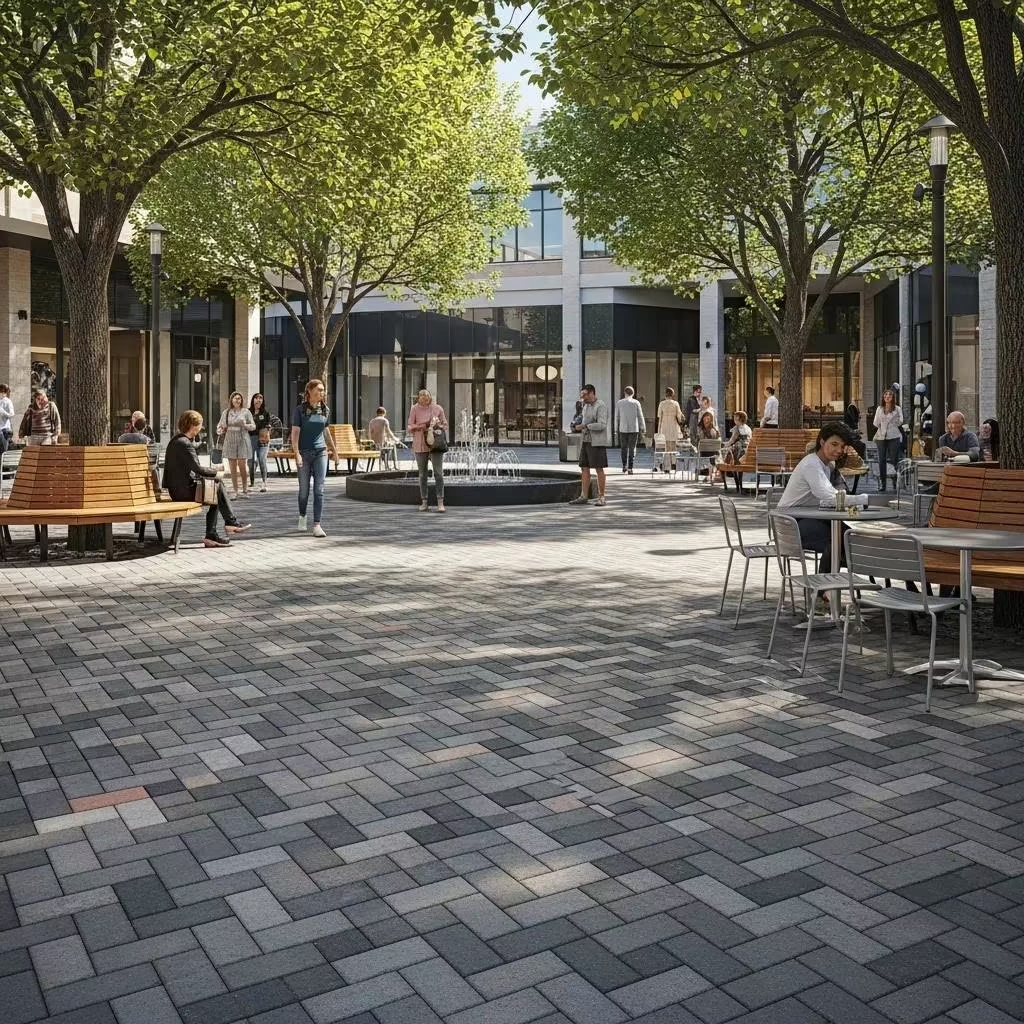
Commercial projects need paver systems built for load capacity, minimal downtime, and code compliance. Interlocking concrete pavers, dense natural stone like granite, and heavy‑duty porcelain are common where durability is critical. Interlocking concrete spreads vehicle loads across many units and is easy to repair; specifying thicker units and a reinforced base makes them suitable for vehicular areas. Permeable paver systems help meet stormwater rules by reducing runoff through layered bases and void‑filled units. Commercial maintenance focuses on joint stabilization, regular sweeping or power washing, and inspections to prevent trip hazards and costly repairs.
Here are practical recommendations for specifiers and asset managers:
- Select interlocking concretepavers for vehicle‑heavy zones—modularity simplifies repairs under traffic.
- Specify dense granite or heavy‑duty porcelain for plazas and entries where aesthetics and long‑term abrasion resistance matter.
- Incorporate permeable systems when stormwater rules or sustainability goals prioritize infiltration over runoff.
These choices balance upfront cost with lifecycle performance and show why base structure and maintenance planning are as important as the surface unit itself.
Which Paver Materials Offer Durability and Low Maintenance for Commercial Use?
Interlocking concrete pavers on a well‑compacted crushed‑rock base are often the most cost‑effective commercial option: they resist rutting, allow targeted repairs, and perform under heavy wheel loads when engineered correctly. Granite offers outstanding longevity and low abrasion but at higher material and installation cost—ideal for historic districts and busy pedestrian areas. Heavy‑duty porcelain has very low porosity and is easy to clean for upscale plazas and terraces, but it requires careful subgrade work to prevent cracking under concentrated loads. Routine maintenance for all these systems includes joint stabilization, surface cleaning, and prompt replacement of any displaced units to keep the site safe and attractive.
How Do Permeable Pavers Support Sustainable Commercial Hardscaping?
Permeable paver systems let water soak through joints or porous units into a layered aggregate base that temporarily stores and infiltrates stormwater, reducing runoff and helping groundwater recharge. These systems commonly use geotextiles, open‑graded aggregates, and structural cells to keep load capacity while preserving infiltration—making them suitable for parking lots, fire lanes, and plazas that must meet stormwater rules. Permeable pavements can reduce the need for traditional storm infrastructure, though long‑term performance depends on regular surface cleaning and vacuuming to prevent joint clogging. For property managers, specifying permeable units with a maintenance plan delivers measurable environmental benefits and easier regulatory compliance.
Permeable Pavement as Stormwater BMP: Research Review and Applicability
This review summarizes the state of permeable pavement research and the limits of its current use. It examines how factors like pavement type, porous mix design, aggregate selection and sizing, sub‑base depth, and layer configuration affect hydraulic, structural, and environmental performance. The paper concludes that adoption of permeable pavements has been limited by gaps in scientific understanding and economic uncertainty and recommends further research to develop practical, cost‑effective solutions and innovations for permeable pavement systems.
Permeable pavement as a stormwater best management practice: a review and discussion, U Kuruppu, 2019
How Much Does Paver Driveway Installation Cost and What Factors Affect Pricing?
Driveway paver costs vary widely based on material choice, site conditions, base‑prep depth, drainage needs, and local labor rates—ranging from budget concrete options to premium natural stone and porcelain. Major cost drivers include excavation and disposal, base thickness and aggregate quality, paver unit price per square foot, skilled labor for precise laying and compaction, and any drainage, retaining walls, or edging needed for long life. To compare quotes accurately, get clarity on base specs, compaction standards, and whether sealing and joint stabilization are included. The table below breaks down typical cost components so homeowners can ask the right questions when collecting bids.
| Cost Element | Typical Cost Range | Notes |
|---|---|---|
| Paver material | Low–High (varies by type) | Concrete is lower; natural stone and porcelain are higher |
| Base preparation | Moderate–High | Deeper, well-compacted bases greatly improve durability; vehicle loads require thicker base |
| Labor / installation | Moderate–High | Skilled labor for pattern work, compaction, and edge restraint |
| Drainage / permeable systems | Moderate–High | Adds environmental value and helps meet code requirements |
| Sealing / joint stabilization | Low–Moderate | Ongoing maintenance that extends service life |
These components explain why two bids for the same square footage can differ: skimping on base prep lowers up‑front cost but often raises lifetime expense due to settling and repairs.
What Are Typical Price Ranges for Different Paver Types?
Concrete and brick usually sit in the lower‑to‑mid price bands, offering a good mix of material cost and repairability. Natural stone and porcelain fall into higher brackets because of quarrying, fabrication, and handling overhead. Labor can be a large share of total cost—often matching or exceeding material costs—because careful bedding, pattern laying, edge restraint work, and compaction take time. Regional labor rates and site complexity (grading, obstacles, retaining walls) further affect final pricing. When deciding, weigh both initial cost and projected maintenance to judge lifecycle value rather than just the upfront number.
Which Installation Steps Influence the Overall Cost of Paver Projects?
- Excavation and grading — sets base depth and disposal costs.
- Base preparation — drives long‑term stability and is often the single biggest cost factor.
- Edge restraints, compaction, and jointing — secure longevity and add to labor time.
That’s why the most reliable quotes spell out base specs and compaction standards rather than quoting a flat per‑square‑foot price without context.
What Are Pet-Friendly Paver Options and Their Benefits for Outdoor Spaces?
Pet‑friendly pavers focus on durability, low porosity for easy cleaning, and surface textures that are gentle on paws while limiting heat retention and slip risk. Porcelain, dense concrete, and select natural stones can meet these needs when installed with proper drainage and jointing. Designing pet areas also means planning waste‑cleanup access, sloped drainage, and soft transitions to artificial turf to reduce wear. Combining pavers with turf creates functional zones—pathways, grooming pads, and shaded rest areas—that simplify maintenance and extend the life of both surfaces. The table below compares pet‑oriented attributes to help pet owners choose pavers that work with complementary turf options.
| Paver Type | Pet-Friendly Attribute | Cleaning / Ease-of-Maintenance | Complementary Turf Option |
|---|---|---|---|
| Porcelain | Low porosity; stain-resistant | Pressure washing; minimal staining | Synthetic turf with drainage backing |
| Dense Concrete | Durable; easy to replace | Joint brushing; power wash | Turf edges to prevent digging |
| Natural Stone (limited types) | Cool surface; textured | Sealing may be required; spot cleaning | Turf pads for rest areas |
Which Pavers Are Durable and Easy to Clean for Pet Areas?
Porcelain stands out for pet zones because low porosity resists stains and odors, and routine pressure washing won’t harm the material. Dense concrete pavers are durable and modular—replace a damaged unit quickly—but they do need joint‑sand maintenance and occasional sealing to limit staining. Some natural stones that stay cool and textured work well in shaded pet rest zones but may need sealing to simplify cleaning. A slight slope to drainage and non‑slip finishes improve hygiene and paw safety, cutting long‑term maintenance needs.
How Can Pet-Friendly Pavers Complement Artificial Turf Installations?
Pavers create clean transition zones, grooming or feeding pads, and shaded platforms that protect turf from concentrated wear and make spot cleaning easier. Using stepping stones or a band of pavers around turf perimeters catches mud and water while sloped joints direct liquids to drains or permeable bases. Heavenly Greens’ combined turf and hardscape experience helps clients design turf+paver layouts that solve drainage, pet comfort, and maintenance challenges—giving homeowners coordinated solutions that look good and last.
How Is Professional Paver Installation Done and Why Choose Heavenly Greens?
Professional paver installation follows a clear sequence—site evaluation, demolition or grading, engineered base build, edge restraint setup, precise laying and compaction, jointing, and optional sealing—to ensure long life. A solid installation starts with a thorough site assessment to identify soil conditions, drainage needs, and load requirements, then specifies base thickness and materials to prevent settlement. Edge restraints and mechanical compaction lock pavers in place; joint sand and stabilizers limit lateral movement and weeds. For homeowners or commercial clients who want coordinated turf and hardscape solutions, hiring a contractor with integrated expertise reduces design friction and simplifies maintenance planning.
Heavenly Greens brings Bay Area experience and a full service approach that pairs artificial turf with hardscaping products like pavers, offering cohesive design and single‑source coordination for residential projects. Our product range includes pavers, and our consultations align turf selection with paver materials and drainage so clients get functional, pet‑friendly, and visually consistent outdoor spaces.
What Are the Key Steps in the Paver Installation Process?
- Site evaluation and layout: confirm grading, drainage, and pattern.
- Excavation and base preparation: remove existing material and install compacted crushed rock to engineered thickness.
- Edge restraint installation: secure the perimeter to stop lateral movement.
- Bedding sand and paver laying: spread a uniform sand layer and lay pavers to pattern.
- Compaction and jointing: compact to interlock units and sweep joint sand; add joint stabilizer if specified.
- Sealing and final inspection: optional sealer enhances color and stain resistance; final checks confirm level and drainage.
Quality control at every step matters—shortcuts like an undersized base or missing edge restraints are the most common causes of early failure.
What Makes Heavenly Greens a Trusted Provider for Paver Projects in the Bay Area?
Heavenly Greens is a local specialist in integrated artificial turf and hardscape installations, offering homeowners pavers alongside turf products and coordinated design services. Our turf experience helps when planning pet‑friendly or low‑maintenance yards, where transitions between soft and hard surfaces must balance drainage, wear resistance, and appearance. Bay Area clients benefit from consultative project scoping and tailored recommendations that match material choice to intended use and maintenance preferences. If you’re exploring turf‑plus‑paver designs, request a consultation to review site‑specific options and get a detailed estimate.
Frequently Asked Questions
What factors should I consider when choosing pavers for my project?
Think about material type, durability, porosity, and the look you want. Each material performs differently in various climates and uses—concrete is versatile and cost‑effective; natural stone offers a premium finish but can need more upkeep. Also consider the intended use (driveway vs. patio), local climate, and drainage—those will affect how long your pavers last and how much maintenance they require.
How can I maintain my paver surfaces to ensure longevity?
Regular cleaning and joint stabilization are key. Sweep debris regularly and use a pressure washer for deep cleaning on tougher stains. Refill joint sand as needed to prevent weeds and shifting. Some materials, like natural stone, benefit from periodic sealing to protect color and resist stains. Inspect the surface for movement or damage and repair promptly to avoid larger problems later.
Are there specific paver options that are better for high-traffic areas?
Yes. For heavy use, interlocking concrete pavers, dense stones like granite, and heavy‑duty porcelain are top choices. Interlocking systems distribute loads well and make repairs easier—good for driveways and commercial spaces. If stormwater management is a concern, consider permeable paver systems to reduce runoff while keeping structural integrity.
What are the environmental benefits of using permeable pavers?
Permeable pavers let water infiltrate into the ground, reducing runoff and helping groundwater recharge. They can lower flood risk, cut erosion, and improve water quality by filtering pollutants through the aggregate base. Using permeable systems supports sustainable landscaping and can help meet local stormwater regulations.
How do I know if I need a professional for paver installation?
Hire a pro if your project has complex patterns, significant excavation, or engineering needs for heavy loads. Professionals assess soil and drainage, size the base correctly, and use installation techniques that prevent costly mistakes. If you’re unsure about materials or the installation process, a contractor can save time and money in the long run.
Can I install pavers myself, and what tools will I need?
Yes—if you have the right tools and are prepared for physical work. Essentials include a shovel, compactor, level, rubber mallet, and a saw for cutting pavers, plus base gravel, sand, and jointing sand. DIY installation is labor‑intensive and requires careful planning; if any step feels uncertain, consult a professional to ensure the job meets quality standards.
Conclusion
Picking the right paver improves the durability, appearance, and usability of your outdoor areas. This guide gives homeowners and professionals the information to weigh materials, match applications, and understand costs. For custom solutions that combine pavers with artificial turf, reach out to our team—we’ll help design an outdoor space that looks great and works for your day‑to‑day needs.


